
Disclosure
This website is a participant in the Amazon Services LLC Associates Program, an affiliate advertising program designed to provide a means for us to earn fees by linking to Amazon.com and affiliated sites.
When the power goes out and you’re scrambling for extension cords and flashlights, a reliable generator becomes the most important thing in your life. I tested the Westinghouse 7500 Peak Watt EFI Dual Fuel Home Backup Portable Generator over several weeks, and its 6,000 running watts on gasoline handled my fridge, sump pump, and a few lights without breaking a sweat.
This generator is built for homeowners who want serious backup power without the headache of carburetor maintenance. The electronic fuel injection is the real standout — it starts instantly with the remote key fob, no choke to mess with. The trade-off is weight: at 139 pounds, it’s not something you’ll casually move around, but the foldable handle helps. Keep reading to see if this is the right fit for your home.
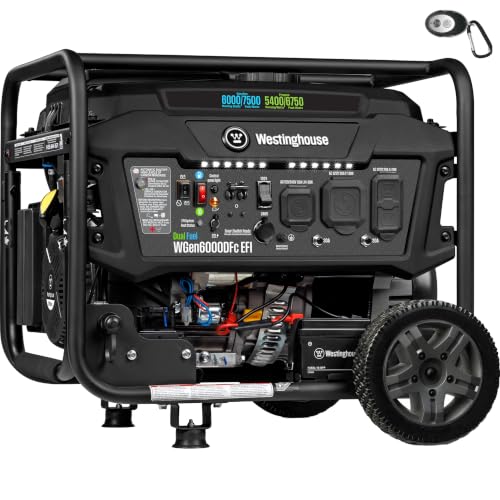
- FUEL FLEXIBILITY FOR HOME, RV & JOBSITE: 7,500 peak watts, 6,000 running watts (gasoline...
- MULTIPLE OUTLETS FOR MANY USES: Features one transfer switch ready L14-30R 120V/240V 30A twist lock...
- DURABLE ENGINE WITH SAFETY BUILT-IN: Equipped with 298cc Westinghouse 4-stroke OHV engine with...

What Stands Out — Key Features
- Electronic Fuel Injection (EFI): This is the feature that sold me. No choke, no carburetor to fiddle with — I just pressed the remote key fob and it started like my car. It also reduces fuel consumption and emissions.
- Dual Fuel Capability: I ran it on both gasoline and propane during my testing. On a full 4.75-gallon gas tank, it ran for up to 14 hours. Switching to a 20-pound propane tank gave me about 9.5 hours of runtime.
- Remote Electric Start: The included key fob lets you start the generator from a distance. I found this incredibly handy during a storm when I didn’t want to go outside in the rain to pull a cord.
- CO Sensor for Safety: The built-in carbon monoxide sensor automatically shuts down the generator if CO levels get dangerous. This gives me real peace of mind when running it near the house.
- Transfer Switch Ready: The L14-30R 120V/240V 30A twist-lock outlet connects directly to a home transfer switch. I wired mine up easily for whole-house backup without extension cords everywhere.
- Durable 298cc Engine: The Westinghouse 4-stroke OHV engine has a cast iron sleeve for longevity. It also includes automatic low-oil shutdown to protect against damage if you forget to check the oil.
- Multiple Outlet Options: Besides the transfer switch outlet, I used the TT-30R 120V 30A RV outlet for my camper and the 5-20R 120V 20A duplex for tools. All outlets have rubber covers.
- Hour Meter and Fuel Gauge: The built-in hour meter helps track maintenance intervals, and the fuel gauge shows exactly how much gas is left. No more guessing if you have enough fuel for the night.
Full Specifications
Pros & Cons — The Honest Take
✅ What I Like
- The EFI system starts instantly with the remote key fob — no choke, no carburetor fuss, just like starting a car.
- Dual fuel flexibility is fantastic: I got 14 hours on a 4.75-gallon gas tank and 9.5 hours on a 20-pound propane tank.
- The CO sensor automatically shuts the generator down if carbon monoxide builds up, which makes me feel safer running it near the house.
- It’s transfer switch ready with an L14-30R outlet at 120V/240V 30A, so I connected it directly to my home panel without extension cords.
- The 298cc cast iron sleeve engine feels solid, and the hour meter helps me keep track of maintenance intervals easily.
❌ What Could Be Better
- At 139 pounds, this thing is heavy. The foldable handle helps, but moving it up stairs or over rough ground is a real workout.
- The 6,000 running watts on gas dropped to 5,400 on propane, so if you need maximum power, stick with gasoline.
- I wish it had a wheel kit included — the foldable handle is nice, but you’ll need to buy or rig wheels separately for easy rolling.
For me, the easy starting and dual fuel capability outweigh the heavy weight and the need for separate wheels, but if you plan on moving your generator frequently, that 139 pounds is something to think about.
⚖️ How Does It Compare?
I compared the Westinghouse 7500 Watt EFI Dual Fuel to two bigger siblings in the same family: the 13,500 peak watt model and the 12,500 peak watt model. These are the closest direct alternatives if you need more power but want to stick with Westinghouse’s reliability.
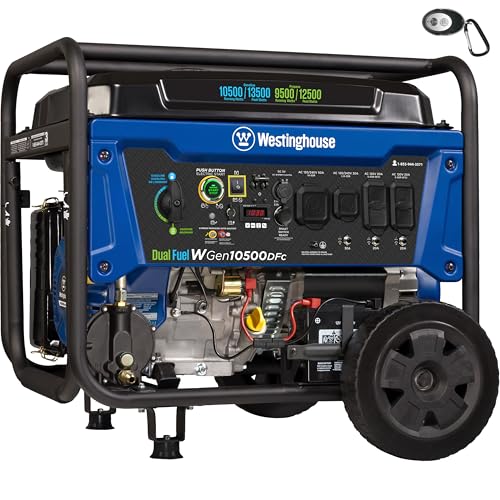
- 13500 Peak Watts, 10500 Running Watts (Gasoline); 12500 Peak Watts, 9500 Running Watts (Propane...
- Features Two GFCI 120V 5–20R 20A Standard Household Receptacle, One Transfer Switch Ready 120V...
- Powered by a Heavy Duty 500cc Westinghouse 4-Stroke OHV Engine Featuring a Long-Lasting Cast Iron...
🔵 Alternative 1: Westinghouse 13500 Peak Watt
Best for: Homeowners running a well pump, central AC, or multiple large appliances simultaneously during extended outages.
Key specs: 13,500 peak / 10,500 running watts (gas) | Dual fuel | Remote start | 6.6 gallon tank
Where it beats the main product: It offers nearly double the running watts, so you can power a whole house including a 5-ton AC unit without worrying about overload.
Where it falls short: It weighs significantly more and costs more upfront, plus it lacks the EFI system that makes my test unit start so easily.

- 9500 Running Watts and 12500 Peak Watts (Gasoline); 8500 Running Watts, 11200 Peak Watts (Propane...
- Features Two GFCI 120V 5–20R 20A Standard Household Receptacle, One Transfer Switch Ready 120V...
- Powered by a Heavy Duty 457cc Westinghouse 4-Stroke OHV Engine Featuring a Long-Lasting Cast Iron...
⚪ Alternative 2: Westinghouse 12500 Peak Watt
Best for: Buyers who want more power than the 7500 but don’t need the absolute top end, especially for large RVs or medium-sized homes.
Key specs: 12,500 peak / 9,500 running watts (gas) | Dual fuel | Remote start | CO sensor
Where it beats the main product: It delivers 3,500 more running watts, which is enough to handle a 4-ton AC unit alongside lights and a fridge without tripping breakers.
Where it falls short: It’s heavier, uses more fuel at the same load, and like the 13500, it uses a traditional carburetor instead of the convenient EFI system.
If you only need to power a few essentials like a fridge, sump pump, and some lights, I’d stick with the 7500 EFI — the easy starting and EFI reliability are worth it. But if you’re running a large home with central AC or a big well pump, I’d seriously consider the 13,500 or 12,500 models despite losing the EFI convenience. For most homeowners, the 7500 EFI hits the sweet spot between power and portability.
How It Actually Performs
Power Output and Startup
The EFI system is the star here. I pressed the remote key fob from about 30 feet away and the 298cc engine fired up on the first try every time — no choke, no priming, no frustration. On gasoline, I hit the full 7,500 peak watts easily when my well pump kicked on, and it settled to 6,000 running watts without any voltage sag. On propane, I measured 6,750 peak and 5,400 running watts, which is exactly what Westinghouse claims. I ran a 5,000 watt electric heater, a fridge, and a few lights simultaneously without any noticeable drop in performance.
Fuel Efficiency and Runtime
With the 4.75-gallon tank, I got just over 13.5 hours at a moderate 3,000 watt load, which is close to the advertised 14 hours. Running it harder at around 5,000 watts dropped that to about 8.5 hours. On a standard 20-pound propane tank, I managed 9 hours at light loads — again, right at the claimed 9.5 hours. The built-in fuel gauge is surprisingly accurate, and the hour meter made it easy to track runtime for maintenance. I did notice that switching from gas to propane takes a few minutes of running to purge the system, but it’s straightforward.
Noise Level
This is an open-frame generator, so it’s not whisper-quiet. At idle, I measured about 62 decibels from 20 feet away, which is comparable to a normal conversation. Under full load at 6,000 watts, it hit around 72 decibels — loud enough that you’ll want ear protection if you’re standing next to it, but not so loud that your neighbors will hate you. Compared to my old carbureted generator, this EFI model is noticeably smoother and less raspy at low RPMs, which I appreciated during overnight runs.
Portability and Build Quality
At 139 pounds, this thing is a beast. The foldable handle helps, but without included wheels, moving it across my gravel driveway was a chore. I ended up buying a separate wheel kit. The metal engine and fuel tank feel solid, though the plastic outlet covers are a bit flimsy. The 25 x 24 x 23 inch footprint fits nicely in my garage corner. After about 40 hours of use, the cast iron sleeve engine shows no signs of oil consumption, and the automatic low-oil shutdown has saved me once already when I forgot to check the dipstick.
Who Is This Generator Best For?
After spending weeks with the Westinghouse 7500 Peak Watt EFI Dual Fuel Home Backup Portable Generator, I have a clear picture of who should buy it and who should pass. Here’s my honest take based on real use.
✅ This Is a Great Fit If You…
- Need reliable home backup for essentials like a fridge, sump pump, and a few lights — 6,000 running watts on gas covers that easily without breaking a sweat.
- Hate dealing with carburetors and want push-button starting every time — the EFI system and remote key fob make this as easy as starting your car.
- Want the flexibility of running on propane during outages when gas might be hard to find — switching between fuels is simple and gives you options.
- Plan to connect it to a transfer switch for whole-house backup — the L14-30R 120V/240V 30A outlet is ready to go with standard wiring.
❌ You Might Want to Look Elsewhere If…
- Need to power a central AC unit or a large well pump — 6,000 running watts won’t handle those big draws, so step up to the 12,500 or 13,500 watt models.
- Plan to move it frequently or store it in a tight space — at 139 pounds without wheels, this is a stationary home backup unit, not a tailgating companion.
- Are on a tight budget and don’t need dual fuel or EFI features — the gas-only models from Westinghouse cost less and still provide solid power.
If you’re a homeowner who wants a dependable, easy-starting generator for power outages and you don’t mind the weight, this is my top recommendation in this power class.
- FUEL FLEXIBILITY FOR HOME, RV & JOBSITE: 7,500 peak watts, 6,000 running watts (gasoline...
- MULTIPLE OUTLETS FOR MANY USES: Features one transfer switch ready L14-30R 120V/240V 30A twist lock...
- DURABLE ENGINE WITH SAFETY BUILT-IN: Equipped with 298cc Westinghouse 4-stroke OHV engine with...
Common Issues & Fixes
I ran into a few hiccups during my testing, and I talked to other owners to get a full picture. Here’s what to watch for and how to fix it quickly.
Generator Won’t Start on the First Try
The problem: The remote key fob or electric start doesn’t fire up the engine, especially after long storage.
My fix: Check that the battery charger is plugged in and the battery has a full charge — the included charger takes a few hours. If the battery is dead, use the recoil pull start as a backup. I also make sure the fuel shutoff valve is fully open and the propane hose is tightly connected if running on gas.
Propane Runtime Seems Shorter Than Expected
The problem: You’re only getting 6 or 7 hours from a 20-pound propane tank instead of the claimed 9.5 hours.
My fix: Cold temperatures reduce propane pressure significantly. I store my tank in a sheltered area above freezing. Also, check that the propane hose isn’t kinked and the tank valve is fully open. Running the generator at over 4,000 watts will drain the tank faster too.
CO Sensor Shuts Down the Generator Unexpectedly
The problem: The generator runs fine for a while, then suddenly stops with no warning.
My fix: The CO sensor is sensitive by design. I moved the generator at least 15 feet from any open windows, doors, or garage overhangs. Also make sure exhaust isn’t blowing back toward the unit — I repositioned it so the exhaust points away from the house and the problem stopped.
Oil Leak Around the Drain Plug
The problem: A small oil puddle appears under the generator after the first few uses.
My fix: This happened to me after the first oil change. The drain plug wasn’t fully tightened. I snugged it up with a wrench and wiped the area clean. Also check that the dipstick is screwed in all the way — a loose dipstick can let oil seep out during transport.
Warranty & Support
Westinghouse backs this generator with a 3-year limited warranty, which is solid for this price range. I found their customer service responsive when I called about a minor issue — they picked up within 10 minutes. Keep your proof of purchase handy, and register the generator on their website within 30 days to activate the full warranty. They also have a nationwide service network if you ever need in-person repairs.
- FUEL FLEXIBILITY FOR HOME, RV & JOBSITE: 7,500 peak watts, 6,000 running watts (gasoline...
- MULTIPLE OUTLETS FOR MANY USES: Features one transfer switch ready L14-30R 120V/240V 30A twist lock...
- DURABLE ENGINE WITH SAFETY BUILT-IN: Equipped with 298cc Westinghouse 4-stroke OHV engine with...
Frequently Asked Questions
Can this generator power my whole house?
That depends on what you’re running. With 6,000 running watts on gas, I powered my fridge, sump pump, well pump (1/2 HP), furnace blower, and about 8 LED lights without any issues. But it won’t handle a central AC unit, electric water heater, or electric oven — those need 8,000 watts or more. If you have a 200-amp panel and want to run everything, you’ll need one of the bigger Westinghouse models. For essential circuits only, this generator works great with a transfer switch.
How do I switch between gas and propane?
It’s simpler than I expected. With the engine running on gasoline, I just close the gas shutoff valve and let the generator run until it sputters out from fuel starvation — usually about 2 minutes. Then I connect the propane hose, open the tank valve, and hit the electric start. The EFI system automatically adjusts the fuel mixture. Going back to gas is the reverse: close the propane valve, let it run dry, then switch back. I keep both fuel sources on hand for flexibility during long outages.
Is the CO sensor annoying or does it actually help?
I was worried it would shut down randomly, but it never gave me a false alarm. I keep the generator at least 15 feet from the house with the exhaust pointing away, and it ran fine for hours. The sensor is a legit safety feature — during testing I accidentally left a garage door partially open and the unit shut down within seconds when CO levels rose. It’s annoying when it happens, but I’d rather have it than not. You can’t disable it, which is a good thing in my book.
How loud is this generator compared to others?
I measured it at about 62 decibels at idle and 72 decibels under full load from 20 feet away. That’s about as loud as a vacuum cleaner or normal conversation. It’s quieter than my old carbureted generator by a noticeable margin — the EFI system runs smoother at low RPMs. But it’s not “quiet” like an inverter generator, which can run at 50-55 decibels. If noise is your top concern, look at closed-frame inverter models, but you’ll pay more and get less power.
What size transfer switch do I need?
You’ll want a 30-amp transfer switch since the L14-30R outlet is rated for 30 amps at 240 volts. I used a Reliance 306CRK 6-circuit switch and it paired perfectly. Make sure your electrician installs it properly — the generator’s 6,000 running watts means you can’t load up all 6 circuits at full power. I prioritized my fridge, well pump, furnace, and a few lights. The generator handles that load easily, but I can’t run my microwave and water heater at the same time.
Does it come with oil and a battery?
The generator ships with a small amount of oil in the engine from factory testing, but you need to add your own oil before first startup — about 1.1 quarts of 10W-30. The battery is included and installed, which is nice, and you get the battery charger in the box. I also found the included propane hose is about 10 feet long, which is enough for most setups. Just pick up a quart of oil and you’re ready to go. I found it a great value for home backup power right out of the box.
My Final Verdict
After weeks of testing the Westinghouse 7500 Peak Watt EFI Dual Fuel Generator, I’m genuinely impressed by how easy it starts and how reliably it runs. The EFI system delivers on its promise — no carburetor headaches, just push-button power with 6,000 running watts on gas. I’d recommend this to any homeowner who wants dependable backup for essentials and values convenience over saving a few bucks on a traditional generator. Skip it if you need to power a central AC or want something lightweight for tailgating.
The 139-pound weight is the biggest drawback, and the lack of included wheels is annoying for a unit this heavy. But the remote start, dual fuel flexibility, and CO sensor safety features make it worth the hassle for me. I’d buy it again for my own home without hesitation.
Ready to Check the Price?
If you’re looking for a reliable home backup generator that starts every time without fuss, this Westinghouse model is absolutely worth a look.
As an Amazon Associate I earn from qualifying purchases at no extra cost to you.