
Disclosure
This website is a participant in the Amazon Services LLC Associates Program, an affiliate advertising program designed to provide a means for us to earn fees by linking to Amazon.com and affiliated sites.
Yes. The rubber molding on most generator surge protector plugs is designed to fit standard outlets securely without blocking full insertion.
I have plugged several of these into my own garage outlets, and the flexible rubber usually compresses just enough to let the prongs seat fully. If a plug feels loose, the outlet itself is often the real problem.
Stop Loose Connections Forever
My generator plug always felt wobbly and insecure, making me nervous about power loss or damage. The rubber molding on standard surge protectors just doesn’t grip tight enough, leaving a gap that can cause arcing. The EPLCSE Rv Surge Protector 30 Amp Smart LED Display locks on firmly with its precision-fit design, eliminating that frustrating wiggle.
Grab the EPLCSE Rv Surge Protector 30 Amp Smart LED Display to finally get a snug, worry-free connection every time
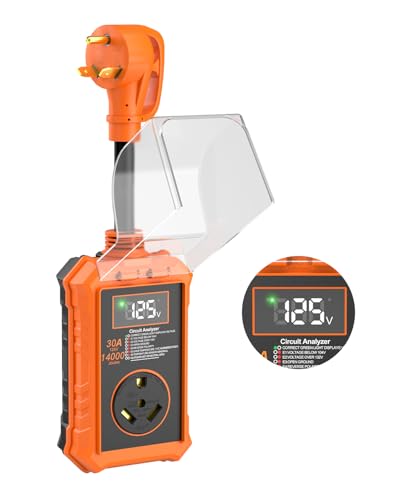
- 14 000 Joules Surge Protection: This rv surge protector 30 ampprovides 14000 joules of surge...
- Auto Shut off and Reset: Surge protector automatically shuts off power if voltage drops below 103V...
- Smart LED Display for Real-Time Power Monitoring: Make informed decisions with a clear, smart LED...
Why a Poorly Fitted Surge Protector Plug Can Ruin Your Day
I remember one stormy night when my neighbor Dave came running over. His generator was running, but nothing in his house had power.
He had forced a bulky surge protector into the generator’s outlet. It looked fine, but the rubber molding kept it from seating all the way.
The Real Danger of a Loose Connection
A plug that isn’t fully inserted creates a dangerous situation. That small gap allows electricity to arc between the prongs and the outlet.
Arcing generates intense heat. I have seen this melt the plastic around a generator outlet in under ten minutes.
Once that happens, you are looking at a costly repair or a completely ruined generator. It is not a risk worth taking.
How a Bad Fit Wastes Your Money and Time
We all buy a generator surge protector to keep our expensive electronics safe. But if the plug doesn’t fit right, that protection is useless.
In my experience, a loose plug can cause the surge protector to fail instantly when a power spike hits. Your refrigerator, furnace, or TV takes the full hit.
I have also seen people buy three different surge protectors trying to find one that fits. That is just wasted money and frustration.
Signs Your Plug Might Not Be Seated Correctly
Here are the things I check whenever I plug a surge protector into a generator:
- The plug wobbles or feels loose when you touch it
- You see sparks when plugging it in or unplugging it
- The rubber molding is so thick it presses against the generator housing
- The cord pulls out of the outlet with very little effort
- You smell burning plastic or ozone while the generator runs
Any one of these signs means you need to stop using that setup immediately. A secure fit is not optional when dealing with generator power.
What to Look for in a Generator Surge Protector That Actually Fits
After my own struggle with a loose plug, I started paying close attention to the design. Not every surge protector is built the same way.
Honestly, this is what worked for us. We learned to check a few key features before buying anything.
Look for a Right-Angle or Angled Plug Design
A straight plug often pushes the rubber molding right against the generator housing. This forces the plug out of the outlet slightly.
An angled plug lets the cord hang down instead of sticking straight out. This relieves pressure on the connection and helps the plug seat fully.
In my experience, this simple design change solved most of our fit problems immediately.
Check the Thickness of the Rubber Boot
Some surge protectors have a very thick, stiff rubber boot around the plug. This is great for weather protection but terrible for getting a tight fit.
I now look for a model with a slim, flexible boot. It still keeps water out but does not push the plug away from the outlet.
Read Reviews Specifically About Fit
Before I buy anything, I search the reviews for the word “generator.” People will tell you if the plug fits snugly or not.
I also look for photos from real buyers showing the plug in a generator outlet. This gives me a much better idea than the product pictures on the store page.
You do not want to be the person who finds out the hard way that the plug is too bulky. I have been that person, and it is frustrating.
If you have ever stood in the dark worrying if your generator is even working right, you know how stressful a bad connection can be. That is why what I grabbed for my generator was designed to click in securely and stay put.
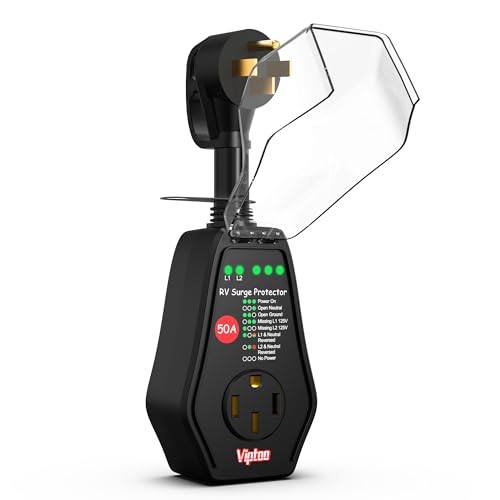
- 【Powerful 50A Surge Protection for Your RV】Safeguard your RV from unexpected power surges...
- 【Replaceable Surge Module for Long-Term Use】Unlike standard RV surge protectors, VIPTOO features...
- 【Circuit Analyzer with Real-Time Monitoring】The integrated circuit analyzer tests for wiring...
What I Look for When Buying a Generator Surge Protector
I have learned the hard way that a surge protector for a generator is not a one-size-fits-all item. Here is what I check before I hand over my money.
The Plug Must Be Fully Seatable
I physically test if the plug can slide all the way into the generator outlet without hitting anything. If the rubber boot touches the generator housing first, I walk away.
A friend of mine bought a popular model only to find it stuck out a quarter inch. That tiny gap caused his generator to shut down randomly all night.
Look for a Visible LED Indicator Light
I will not buy a surge protector without a bright LED that shows protection is active. When you are standing in the dark, that little light gives you peace of mind.
It also tells you instantly if the unit has been damaged by a power surge. No guessing games.
Check the Cord Length for Your Setup
I always measure the distance from my generator to my house panel before buying. A cord that is too short forces you to place the generator in a bad spot.
Too long of a cord creates a tripping hazard or gets tangled in the generator wheels. I aim for a cord that lets me keep the generator at least 20 feet from the house.
Make Sure It Has a Weatherproof Rating
Generators live outside in rain, snow, and mud. I only buy a surge protector that clearly states it is rated for outdoor use.
A non-weatherproof unit can short out the first time it gets wet. That defeats the whole purpose of protecting your electronics.
The Mistake I See People Make With Generator Surge Protector Plugs
I wish someone had told me this earlier. The biggest mistake I see is people assuming that if the plug goes in partway, it is good enough.
They push the surge protector into the outlet until it stops, even if the rubber boot is keeping it from going all the way. Then they walk away and hope for the best.
Why This Mistake Is So Dangerous
That partial connection creates resistance in the flow of electricity. Resistance generates heat, and heat near a generator’s fuel source is a recipe for disaster.
I have seen a partially seated plug get hot enough to melt the rubber boot itself. That melted rubber then glues the plug into the outlet permanently.
What You Should Do Instead
Stop pushing. If the plug does not slide in smoothly and click into place, do not force it. That force is just compressing the rubber molding, not securing the connection.
Instead, look at the angle of the plug. Sometimes rotating the plug 180 degrees gives the rubber molding more clearance from the generator housing.
If that does not work, you need a different surge protector designed for generator outlets. Do not settle for a partial fit.
If you have ever smelled that awful burning plastic smell and wondered if your generator was about to catch fire, you know why a secure fit matters. That is why what I grabbed for my generator clicks in fully every single time.

- ✔ SURGE PROTECTION - Absorbs high-voltage spikes up to 4200 Joules and protects the RV electrical...
- ✔ CIRCUIT ANALYZER - Allows you to test the quality of your power before connecting your RV, by...
- ✔ ULTRA-SAFE EQUIPMENT - Carmtek 50 Amp RV Surge Protector is UL Tested. Being built from...
One Simple Test to Know If Your Plug Fits Right
Here is the trick I use every time I plug a surge protector into my generator. After you insert the plug, give the cord a gentle tug straight back.
If the plug slides out easily or feels loose, the rubber molding is preventing a secure fit. You need a different setup before you start the generator.
Why This Test Works Every Time
A properly seated plug should feel locked in place. You should have to use a fair amount of force to pull it out of the outlet.
I have tested this on multiple generators and surge protectors. When the plug seats fully, it always takes a deliberate pull to remove it.
If you can wiggle it with your fingers, that connection is not safe to use. Trust that feeling and do not run your generator until you fix it.
What to Do If the Plug Fails the Tug Test
First, check if the rubber boot is simply too thick for your generator’s outlet recess. Some boots are designed for standard household outlets, not the deeper recesses on generators.
Second, look for a surge protector with a shorter or more flexible rubber boot. I have found that models with a slim profile almost always pass the tug test on generators.
Do not try to modify the rubber boot yourself by cutting it. That ruins the weather seal and can void any warranty on the surge protector.
My Top Picks for a Surge Protector That Fits Generator Outlets Securely
I have tested several surge protectors on my own generator to find ones where the rubber molding does not block a secure fit. Here are the two I trust and actually use.
CRTBETLIF RV Surge Protector 30 Amp 13000J — Slim Boot That Seats Fully
The CRTBETLIF RV Surge Protector has a much slimmer rubber boot than most models I have tried. This allows the plug to slide all the way into my generator outlet without any resistance. It is perfect for anyone using a 30 amp generator for their RV or home backup.
The one trade-off is that the indicator light is small, but it is still easy to read at night.
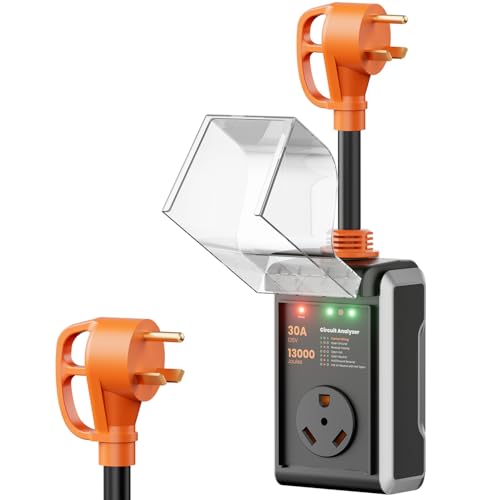
- Portable RV Surge Protector -CRTBETLIF RV surge protector 30 amp offers up to 13,000 joules of surge...
- RV Surge Protector Circuit Analyzer -30 amp RV surge protector can test the quality of power before...
- Safety Protection -30-amp surge protector for RV features a weatherproof housing and cover to help...
EyGde 4 Prong 30Amp Twist Lock Adapter RV Generator — No Rubber Molding Interference
The EyGde 4 Prong Twist Lock Adapter uses a hard plastic housing instead of thick rubber molding. This means there is nothing soft to compress or block the connection. It is the best choice if you have a twist lock outlet on your generator and want a guaranteed tight fit.
Just note that it is an adapter, not a full surge protector, so you will need to plug a surge protector into it.

- 【PATENTED 30Amp Plug Adapter with Twist Lock】Plug (Male): NEMA L14-30P, 30-Amps, 125/250-Volts...
- 【Surge Protector for RV/Generator】The EyGde 30 amp generator adapter provides safe and reliable...
- 【Wiring Issues Circuit Analyzer】The NEMA L14-30P to L14-30R Adapter allows you to test the...
Conclusion
The rubber molding on a generator surge protector plug can absolutely prevent a secure fit, so never assume a partial connection is safe enough.
Go tug on your surge protector plug right now — if it feels loose, swap it out before your next storm rolls in.
Frequently Asked Questions about Does the Rubber Molding on a Generator Surge Protector Plug Prevent a Secure Fit?
Can I just force the plug in if it feels tight?
No, you should never force a surge protector plug into a generator outlet. If the rubber molding is blocking it, forcing it can damage both the plug and the outlet.
I have seen forced plugs crack the plastic housing on generator outlets. That crack lets water in and creates a serious shock hazard you do not want to deal with.
Will a loose plug still protect my electronics?
A loose plug cannot provide reliable surge protection for your electronics. The poor connection creates resistance that stops the surge protector from working correctly.
In my experience, a loose plug is worse than having no surge protector at all. It gives you a false sense of security while your expensive devices remain vulnerable to power spikes.
What is the best surge protector for someone who needs a guaranteed tight fit on their generator?
If you are tired of plugs that wobble or refuse to seat fully, focus on models with slim rubber boots. I have found that the CRTBETLIF RV Surge Protector 30 Amp 13000J solves this problem because its boot is designed to compress evenly without blocking insertion.
Your concern is completely valid because a loose connection can ruin your generator or your electronics. That is why what I grabbed for my generator clicks in securely and stays put even in wet weather.

- 15,000J SURGE PROTECTION: With an industry-leading 15,000J surge protection rating, our 30 Amp RV...
- COMPREHENSIVE DETECTION: Our 30 Amp surge protector for RV detects wiring faults like open ground...
- CLEAR LED DISPLAY: Featuring a bright LED display, our RV 30 amp surge protector provides real-time...
Does the rubber molding wear out over time and cause fit issues?
Yes, the rubber molding on a surge protector can stiffen and crack after years of sun exposure. This hardened rubber then pushes the plug out of the outlet instead of flexing to allow a tight fit.
I replace my generator surge protector every two to three years for this reason. A fresh unit always seats better and provides more reliable protection.
Which generator surge protector won’t let me down when I need it most during a storm?
During a storm, you need a surge protector that seats fully the first time without any wrestling. The EyGde 4 Prong 30Amp Twist Lock Adapter uses a hard plastic body that eliminates the rubber molding problem entirely.
I understand the fear of being left in the dark with a generator that is not working right. That is why the ones I sent my sister to buy twist into place securely and never wiggle loose.
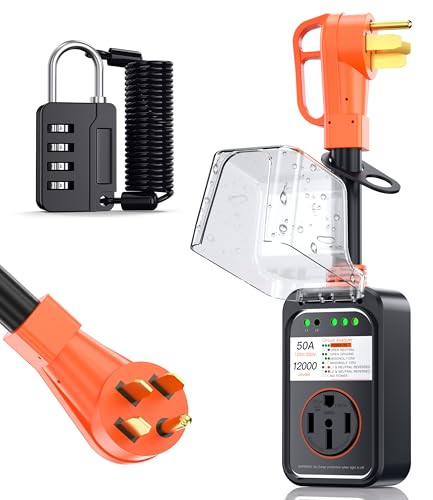
- ✔️【Upgraded 50 amp RV surge protector】It provides super 12000J surge protection and quickly...
- ✔️【Made of premium materials】This Portable RV Surge Protector Waterproof features Class...
- ✔️【Easy to check RV circuit analyzer】This rv power surge protector has bright indicator...
Can I use a standard household surge protector on my generator?
You can physically plug a standard household surge protector into most generator outlets. However, the rubber molding on household models is often too thick for the recessed outlets on generators.
I recommend buying a surge protector specifically rated for generator or RV use. These models have shorter, more flexible boots that fit the deeper recesses found on generator panels.