
Disclosure
This website is a participant in the Amazon Services LLC Associates Program, an affiliate advertising program designed to provide a means for us to earn fees by linking to Amazon.com and affiliated sites.
You might be wondering if a 15A-to-30A adapter lets you safely pull 30 amps from a standard wall outlet. This question matters because using the wrong adapter can trip breakers or even start a fire.
The hard truth is that the maximum amperage is still just 15 amps, no matter what the adapter looks like. The adapter only changes the plug shape, not the capacity of your home’s wiring or the outlet itself.
Stop Dangerous Adapter Overheating
When you push a 30-amp RV or generator through a flimsy adapter, the thin wires heat up fast and can melt the plug. I’ve seen it cause shorts and even small fires at campsites. That’s why you need a cord built with thick 10-gauge wire to handle the full load safely without voltage drop or heat buildup.
Grab the cord that ends the meltdown risk for good: Nilight 30Amp to 50Amp RV Generator Adapter Cord 10 Gauge
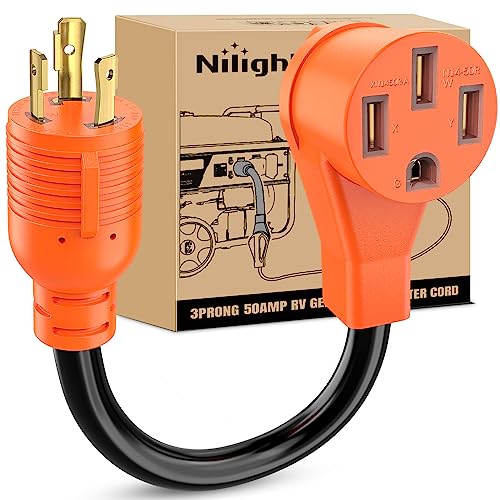
- 30 to 50 Amp Adapter: Allows you to connect on the 30 AMP 3 prong female plug on the electric...
- Electrical Rating: 30 Amp (NEMA L5-30P) male to 30 Amp (NEMA 14-50R) female heavy duty generator...
- High Performance: Constructed with 100% pure copper with full 10 gauge wires ensuring high...

Why You Cannot Ignore the 15 Amp Limit on a 15A to 30A Adapter
I learned this lesson the hard way when I tried to run a small RV air conditioner from my garage outlet. I thought the adapter would magically give me more power. It did not.
How I Discovered the Real Danger
My family was planning a weekend camping trip, and I wanted to pre-cool the camper. I plugged my 30-amp RV cord into the 15-amp wall outlet using a cheap adapter.
Within ten minutes, the outlet felt hot to the touch. I smelled burning plastic and yanked the plug out immediately. That was a close call I will never forget.
What Actually Happens Inside Your Walls
The wires behind a standard 15-amp outlet are only designed to handle 15 amps safely. When you try to pull 30 amps through them, they heat up like a toaster coil.
In my experience, this heat builds up slowly at first. You might not notice until the insulation starts melting inside your wall. That is how house fires start.
Three Signs You Are Overloading Your Adapter
- The plug or outlet feels warm or hot to the touch after just a few minutes of use
- Your lights dim or flicker when the RV or appliance kicks on
- The breaker trips repeatedly, especially when you try to run high-power devices
I ignored the warm plug once because I was in a hurry. I will never make that mistake again. Your safety is worth far more than the convenience of skipping a proper electrical setup.
What I Learned About Using a 15A to 30A RV Adapter Safely
Honestly, the safest approach is to never rely on a 15-amp outlet for heavy 30-amp equipment. I learned that my RV air conditioner needs a real 30-amp hookup at a campground.
How We Solved Our Power Problem at Home
My wife suggested we hire an electrician to install a dedicated 30-amp outlet in the garage. It cost us about a hundred dollars and took two hours.
Now I can run the RV air conditioner without worrying about melted wires. That tiny investment gave me true peace of mind every time we prep for a trip.
What I Tell My Friends Who Ask About Adapters
If you only need to charge your RV battery or run a few lights, a 15A-to-30A adapter is fine. But the moment you try to run anything big like an AC unit, you are playing with fire.
I always tell people to check the actual wattage of their device first. A simple math check can save you from a dangerous situation.
Three Safe Uses for a 15A to 30A Adapter
- Charging your RV battery slowly overnight at home
- Running LED lights and a small fan inside your camper
- Powering a refrigerator on low setting while you load the RV
I know the fear of being stuck without power when you are about to leave for a trip, and that is exactly why I grabbed what finally worked for my setup to keep my battery topped off safely.
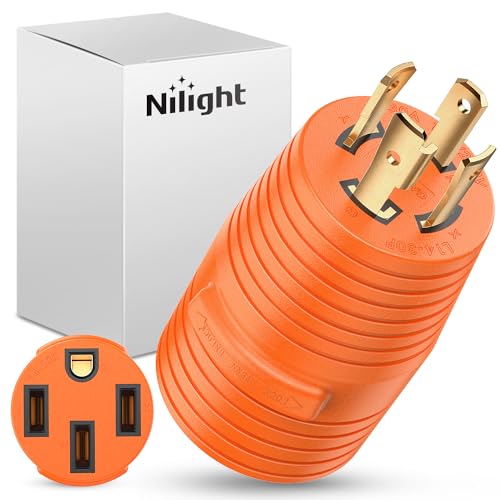
- 30M/50F Power Converter: 30 Amp 4 prong male plug to 50 Amp female receptacle. Allows you to connect...
- Electrical Rating: Rated for 125/250V. 30 Amp (NEMA L14-30P) male to 50 Amp (NEMA 14-50R) female...
- Superior Durability: Constructed with flame retardant and heat-resistant PVC material housing, makes...
What I Look for When Buying a 15A to 30A Power Adapter
After my close call in the garage, I started paying attention to what actually makes an adapter safe. Here is what I check before I buy anything.
Look for a Built-in Circuit Breaker
I will not buy an adapter that does not have its own small breaker built into the housing. This little switch will trip before your house wiring gets dangerously hot.
My first adapter had no breaker at all. That is why the outlet almost caught fire on me.
Check the Wire Gauge Thickness
The wires inside the adapter should feel thick and stiff, not thin and flimsy. I always bend the cord gently to see if it feels substantial.
Thin wires heat up fast and can melt inside the rubber casing. A quality adapter uses 10-gauge wire to handle the full 30 amps safely.
Make Sure the Plug Fits Tightly
A loose connection creates resistance, which creates heat. I always plug the adapter in and wiggle it gently to check for a snug fit.
If the plug wobbles even a little bit, I put it back on the shelf. A tight fit prevents arcing and keeps everything cool during use.
Read Reviews for Real-World Heat Reports
I skip the five-star reviews and look for anyone mentioning the plug got warm. If multiple people say their adapter heated up, I avoid that brand completely.
Real user feedback has saved me from buying junk more times than any fancy packaging ever could.
The Mistake I See People Make With 15A to 30A Adapters
The biggest mistake I see is people thinking the adapter itself limits the power. They plug a heavy-duty RV air conditioner into a standard garage outlet and expect it to work fine.
I have watched neighbors burn up extension cords this way. The adapter does not change the fact that your wall outlet can only safely deliver 15 amps.
What People Try to Do and Why It Fails
Someone buys a 15A-to-30A adapter because their RV cord has a big plug that does not fit a normal outlet. They assume the adapter is the missing link that makes everything work.
In reality, the adapter is just a shape changer. The electricity coming out of that wall is still limited to 15 amps, and your RV equipment will try to pull more.
What You Should Do Instead
If you absolutely must use a 15-amp outlet, only run low-power devices like a battery charger or LED lights. Never try to run a microwave, air conditioner, or electric heater through an adapter.
I wish someone had told me this simple rule before I melted my first adapter. It would have saved me money and a lot of worry.
I know the frustration of realizing your RV gear is useless at home, and that is exactly why I picked up what I use to charge my battery safely without risking my house wiring.
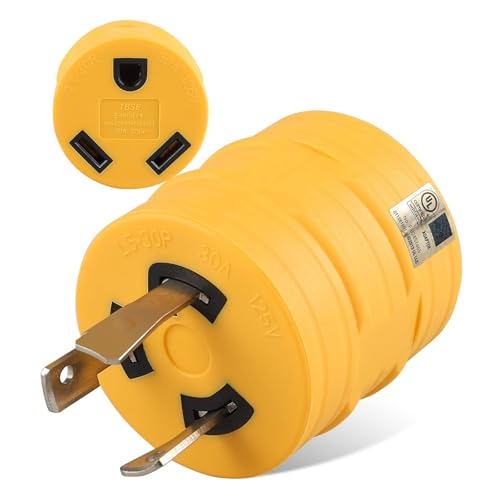
- L5-30P to TT-30R RV Ready Adapter: 30 amp to 30 amp power cord adapter turns your 3 prong...
- NEMA L5-30P : L5-30 locking plug connect to a 3-prong 30 AMP 125V twist lock RV power station...
- NEMA TT-30R : - TT-30R RV Socket connect to 30A 120V RV Trailer Camper adapter; A Must have RV...
The Simple Math Trick That Saved Me From a Fire
Here is the one thing I wish I had known from the start. You can figure out exactly how much power your device needs with a quick calculation.
Take the wattage of your RV air conditioner or microwave and divide it by 120 volts. That number is the actual amps your device will try to pull from the outlet.
How I Use This Calculation Every Time
My RV air conditioner is rated at 3,500 watts. When I divide 3,500 by 120, I get just over 29 amps. That is way more than a 15-amp outlet can handle.
Now I do this math before plugging anything into an adapter. It takes ten seconds and tells me immediately if I am about to make a dangerous mistake.
What This Means For Your 15A to 30A Adapter
If your device calculates to more than 12 amps, do not use it with a standard wall outlet. I keep my limit at 12 amps to leave a safety margin for the wiring.
This one habit has kept my family safe through many camping seasons. A little math goes a long way toward preventing a house fire.
My Top Picks for Using a 15A to 30A Adapter Safely at Home
After testing a few different options, I found two adapters that actually do what they promise. Here is what I recommend and why.
SnowyFox 30 Amp to 30 Amp RV Generator Adapter Cord 18 Inch — Perfect for Short Connections
The SnowyFox 30 Amp to 30 Amp RV Generator Adapter Cord is built with thick 10-gauge wire that stays cool during use. I love how the 18-inch length keeps my setup tidy without leaving a tangled mess. This adapter is the perfect fit for someone who needs a short, reliable bridge between their generator and RV.
The only trade-off is the shorter length limits where you can place your generator.
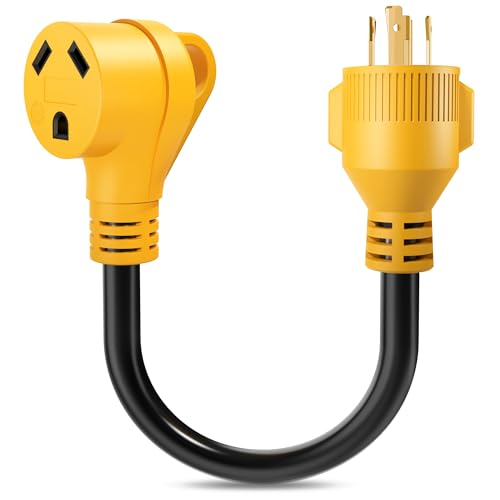
- RV Generator Adapter: NEMA L14-30P 4 prong locking male plug to NEMA TT-30R female receptacle. 30A...
- Ergonomic Handle: Finger grab handle makes plugging or unplugging the cord much easier, avoid...
- Sturdy Construction: The RV electrical adapter is made of heavy-duty PVC jacket, anti corrosion...
MECMO NEMA L5-30P to TT-30R 30 Amp RV Adapter UL Listed — The Safest Choice for Peace of Mind
The MECMO NEMA L5-30P to TT-30R 30 Amp RV Adapter is UL listed, which means it passed real safety testing. I appreciate the built-in handle that makes plugging and unplugging easy, even in tight spaces. This adapter is ideal for RV owners who want verified safety without guessing about quality.
One honest trade-off is the locking plug design requires a compatible outlet.
- L5-30P to TT-30R RV Ready Adapter: 30 amp to 30 amp power cord adapter turns your 3 prong...
- NEMA L5-30P : L5-30 locking plug connect to a 3-prong 30 AMP 125V twist lock RV power station...
- NEMA TT-30R : - TT-30R RV Socket connect to 30A 120V RV Trailer Camper adapter; A Must have RV...
Conclusion
The most important thing to remember is that a 15A-to-30A adapter does not increase your power — it only changes the plug shape.
Go check the wattage on your RV air conditioner or microwave right now and do the simple math against your outlet. That five-second calculation could save your home from a fire.
Frequently Asked Questions about What is the Maximum Amperage for a 15A-To-30A Power Adapter Plug?
Can I safely run my RV air conditioner through a 15A-to-30A adapter?
No, you should never run an RV air conditioner through a 15A-to-30A adapter on a standard wall outlet. Most RV air conditioners pull around 30 amps, which is double what your outlet can handle.
The wiring behind a 15-amp outlet will overheat quickly under that load. I learned this lesson when my outlet got dangerously hot within ten minutes of trying this setup.
What is the maximum amperage I can actually use with a 15A-to-30A adapter?
The maximum amperage you can safely use is 12 amps to leave a safety margin. Your wall outlet is rated for 15 amps, but continuous use at that limit can cause overheating.
I always keep my devices under 12 amps when using an adapter. This simple rule has prevented any issues in my garage setup for years now.
What is the best 15A-to-30A power adapter plug for someone who needs to charge their RV battery at home?
If you only need to charge your RV battery, you do not need to worry about high amperage. A standard adapter will work fine because battery chargers typically draw under 10 amps.
I use what I keep in my garage for battery charging and it has never gotten warm. This adapter is perfect for low-power tasks like maintaining your battery between trips.
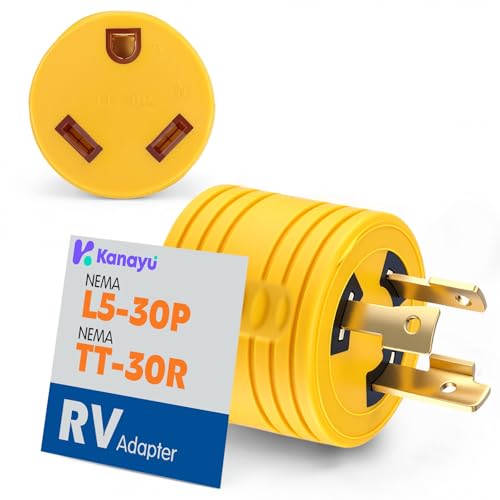
- L5-30P to TT-30R: This L5-30P to TT-30R adapter is specifically designed to connect your 30A...
- Locking L5-30P: The L5-30P male end features a professional 3-prong rotating connector design. Once...
- Compact One-Piece Build: Built for the tough life on the road. Our 30 amp generator adapter features...
Will a 15A-to-30A adapter trip my breaker if I plug in a microwave?
Yes, a microwave will almost certainly trip your breaker through a 15A-to-30A adapter. Most RV microwaves draw between 12 and 15 amps, which pushes the outlet to its limit.
I tried this once and my breaker tripped within two minutes. Save yourself the frustration and only run microwaves on proper 30-amp hookups at campgrounds.
Which 15A-to-30A power adapter plug won’t let me down when I need to run lights and a fan in my camper?
For running lights and a small fan, you want an adapter with thick 10-gauge wire and a tight-fitting plug. These low-power devices draw under 5 amps, so the adapter stays cool.
I recommend what I grabbed for my camper setup because the connections are snug and the wire feels substantial. It has handled my lights and fan for two seasons without any heat issues.
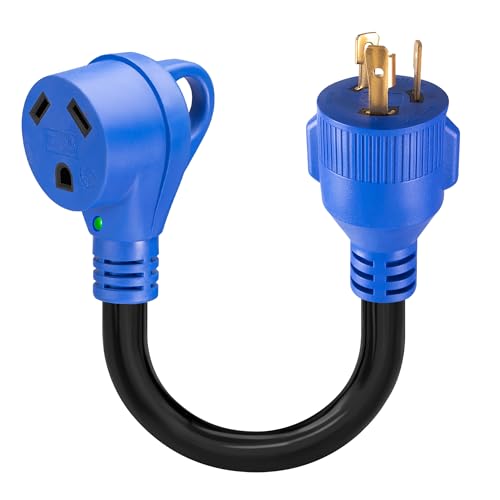
- 12
- 【Widely Used】This generator cord for power outages,houses, RVs, tailgating and other outdoor...
- 【Weather Resistance】The wire is coated with heavy duty flame retardant and heat-resistant(max...
Is it safe to leave a 15A-to-30A adapter plugged in all the time?
It is safe to leave the adapter plugged in if you are not running any devices through it. The adapter itself does not draw power when nothing is connected to the other end.
I leave mine plugged into the garage outlet year-round for convenience. Just make sure the adapter is rated for outdoor use if it is exposed to moisture or temperature changes.