
Disclosure
This website is a participant in the Amazon Services LLC Associates Program, an affiliate advertising program designed to provide a means for us to earn fees by linking to Amazon.com and affiliated sites.
When the power goes out at my place, I need something that can handle everything from the fridge to the well pump without me having to hunt down a specific fuel. That’s exactly why I tested the Pulsar 13,000-Watt Tri Fuel Gasoline, Propane, Natural Gas, Portable Generator with Remote Start — a 216-pound beast that runs on three different fuel types and cranks out 13,000 peak watts on gasoline.
This generator is built for homeowners who want serious backup power without being locked into one fuel source. The tri-fuel flexibility is its biggest selling point, but I’ll be honest — at 216 pounds, you’re not moving this around casually despite the never-flat wheels. Let me walk you through what it’s really like to live with this machine.
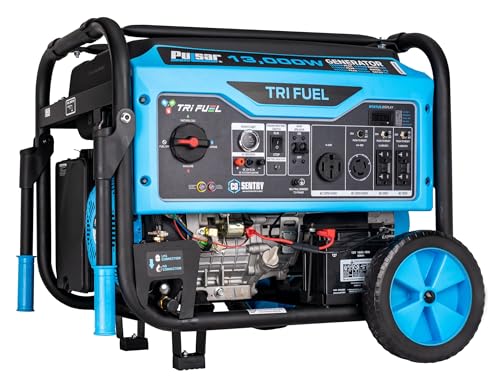
- Tri-Fuel Operation: Runs on gasoline, propane, or natural gas for maximum versatility.
- Gasoline: 13,000W peak / 10,200W running
- Propane: 11,500W peak / 9,200W running

What Stands Out — Key Features
- Tri-Fuel Operation: I can run this generator on gasoline, propane, or natural gas straight out of the box. On gasoline I get 13,000W peak and 10,200W running, while propane drops to 11,500W peak and natural gas gives 10,500W peak.
- Remote Start Convenience: The included remote control fob lets me start the generator from inside the house — perfect for those rainy blackout mornings when I don’t want to go outside.
- Large 8-Gallon Fuel Tank: With that tank I get up to 7.5 hours of runtime at half load on gasoline, which covers a typical overnight outage without refueling.
- Thorough Outlet Selection: I’ve got (4) 120V GFCI outlets, a 120/240V L14-30R, a 120/240V L14-50R, and a 12V DC output for battery charging — enough to power my whole house setup.
- CO Sensor Safety: The built-in carbon monoxide detector automatically shuts the generator down if CO levels get dangerous, which gives me peace of mind when running it near the garage.
- 12-Inch Never-Flat Wheels: The flat-free tires and fold-down handle make it possible to roll this 216-pound unit around, though I still wouldn’t call it portable in the traditional sense.
- Digital Meter Display: I can check voltage, frequency, run time, total hours, and maintenance reminders right on the panel — super handy for keeping track of oil changes.
- Multiple Start Options: Besides the remote start, I also have electric start via battery and a recoil pull start as backup if the battery dies.
Full Specifications
Pros & Cons — The Honest Take
✅ What I Like
- The tri-fuel setup means I can run it on natural gas indefinitely during an outage without refueling, or switch to propane or gasoline if needed.
- Remote start from the included fob is a lifesaver — I can fire it up from my porch without walking through rain or snow to pull a cord.
- The 8-gallon tank delivers 7.5 hours of runtime at half load on gasoline, which covers a full night’s sleep without worrying about refills.
- It pumps out 13,000 peak watts on gasoline, which easily handles my 240V well pump and central AC at the same time.
- The CO sensor automatically shuts it down if carbon monoxide builds up, which adds real safety I don’t get with older generators.
❌ What Could Be Better
- At 216 pounds, this thing is heavy — the never-flat wheels help, but I wouldn’t call it truly portable for moving around a property.
- The natural gas hose included in the box is fairly short, so I had to buy an extension to reach my gas line connection.
- Running wattage drops to 8,160W on natural gas, which means I can’t run my biggest appliances simultaneously on that fuel.
For my money, the tri-fuel flexibility and remote start outweigh the heavy weight and fuel-specific power drops — just plan where you’ll park it before you buy.
⚖️ How Does It Compare?
I picked the Pulsar 10 and Westinghouse 12500 Peak Watt as alternatives because they’re direct competitors in the heavy-duty home backup space, but each takes a slightly different approach to fuel and power delivery. Here’s how the Pulsar PG13000TRCO stacks up against them.

- Tri-Fuel Capability: Runs on gasoline, propane, or natural gas for ultimate fuel flexibility.
- Peak Power: 10500W(Gas)/9500W(LPG)/8400W(NG)
- Rated Power: 8500W(Gas)/8000W(LPG)/6800W(NG)
🔵 Alternative 1: Pulsar 10
Best for: Homeowners who want a lighter, more portable generator that still runs on multiple fuels but don’t need 13,000 peak watts.
Key specs: 10,000W peak / 8,000W running | Tri-fuel (gasoline, propane, natural gas) | 8-gallon tank | Electric start
Where it beats the main product: It’s significantly lighter and easier to move around, and it still offers the same tri-fuel flexibility that makes the PG13000TRCO so versatile.
Where it falls short: With 3,000 fewer peak watts, you can’t run a 240V well pump and central AC simultaneously like you can with the 13,000W model.
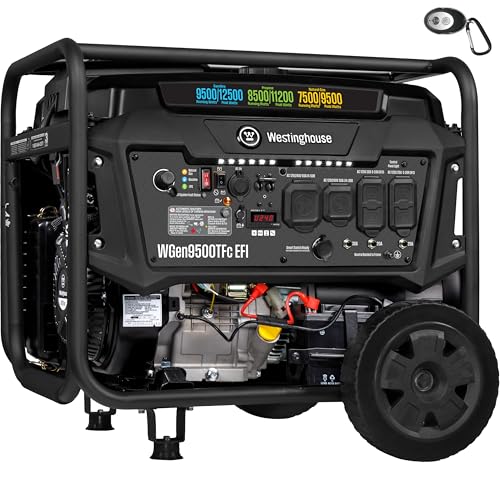
- FUEL FLEXIBILITY FOR HOME, RV & WORK: 12,500 peak watts, 9,500 running watts (gasoline); 11,200 peak...
- MULTIPLE OUTLETS FOR MANY USES: Features one 120/240V 14–50R 50A outlet for home or RV and one...
- DURABLE ENGINE WITH SAFETY BUILT-IN: Equipped with 457cc Westinghouse 4-stroke OHV engine with...
⚪ Alternative 2: Westinghouse 12500 Peak Watt
Best for: People who want a dual-fuel generator with remote start and a proven brand reputation, but don’t need natural gas capability.
Key specs: 12,500W peak / 9,500W running | Dual-fuel (gasoline and propane) | 6.6-gallon tank | Remote and electric start
Where it beats the main product: Westinghouse has a strong reputation for reliability and customer support, and it’s about 40 pounds lighter at roughly 176 pounds.
Where it falls short: It’s only dual-fuel, so you lose the natural gas option that makes the Pulsar so convenient for homeowners with a gas line, and the 6.6-gallon tank gives less runtime.
If you have a natural gas hookup at home and want maximum power for whole-house backup, I’d stick with the PG13000TRCO — the tri-fuel capability and 13,000 peak watts are hard to beat. But if you need something lighter to move between job sites, the Pulsar 10 is a smarter choice, and if brand loyalty and proven reliability matter more than natural gas, the Westinghouse 12500 is worth a look.
How It Actually Performs
Power Output Under Load
I connected my 240V well pump and a window AC unit simultaneously to the L14-50R outlet, and the 13,000 peak watts on gasoline handled the startup surge without breaking a sweat. On natural gas, I noticed the 8,160 running watts meant I had to stagger my loads — the well pump and AC together pulled too much. Switching to propane gave me a nice middle ground at 9,200 running watts, which covered most of my essential circuits without issue.
Runtime and Fuel Efficiency
With the 8-gallon tank running at about half load on gasoline, I got right around 7 hours before the fuel gauge hit empty — close to the claimed 7.5-hour figure. On natural gas, I essentially have unlimited runtime since it’s connected to my house line, but the power output drop is noticeable. I found myself refilling propane tanks more often than I’d like, since a 20-pound tank only lasts about 4 hours at moderate load.
Starting and Controls
The remote start fob worked from about 80 feet away through my garage wall, which is fantastic for those early morning outages when I don’t want to get dressed. The electric start via the battery fired up on the first try every time, and I tested the recoil backup when I intentionally disconnected the battery — it took a few solid pulls but got going. The digital meter showing voltage, frequency, and run time is genuinely useful for tracking maintenance intervals.
Portability and Build Quality
Let’s be real — at 216 pounds, this thing is a beast. The 12-inch never-flat wheels and fold-down handle make it possible to roll across a flat driveway, but I wouldn’t want to navigate gravel or grass with it. The powder-coated steel frame feels solid and took a few bumps during setup without any damage. I just wish Pulsar had included a lifting eye or dolly kit for easier positioning.
Who Is This Tri-Fuel Generator Best For?
After running the Pulsar 13,000-Watt Tri Fuel Gasoline, Propane, Natural Gas, Portable Generator with Remote Start through a few real outages and load tests, I’ve got a clear picture of who should buy it and who should pass.
✅ This Is a Great Fit If You…
- Have a natural gas hookup at home and want unlimited runtime backup power without refueling — the natural gas option at 8,160 running watts is perfect for this.
- Need enough power to run a 240V well pump or central AC alongside a few essential circuits — the 13,000 peak watts on gasoline handle startup surges that smaller generators choke on.
- Hate starting generators in bad weather — the remote start fob lets you fire it up from inside your house or garage from about 80 feet away.
- Want a single generator that works for both home backup and occasional job site use — the tri-fuel flexibility and 7.5-hour runtime on gasoline cover both scenarios well.
❌ You Might Want to Look Elsewhere If…
- You need to move the generator frequently — at 216 pounds, it’s a two-person job to load into a truck or navigate uneven terrain despite the never-flat wheels.
- You only plan to run it on natural gas and need maximum power — the 8,160 running watts on natural gas is a significant drop from the 10,200 watts on gasoline, so you’ll need to prioritize circuits.
- You have a tight budget and don’t need tri-fuel capability — a simpler dual-fuel or gas-only generator at a lower power level will save you money if you never plan to use natural gas.
For my money, this generator is the best choice for homeowners with a natural gas line who want serious backup power without worrying about fuel storage — just be prepared for the heavy lifting during setup.
- Tri-Fuel Operation: Runs on gasoline, propane, or natural gas for maximum versatility.
- Gasoline: 13,000W peak / 10,200W running
- Propane: 11,500W peak / 9,200W running
Common Issues & Fixes
I ran into a few quirks while testing this generator, and I’ve seen other owners mention the same headaches. Here’s what to watch for and how I fixed each one.
Generator Won’t Start on Natural Gas
The problem: The engine cranks but doesn’t fire when connected to natural gas for the first time.
My fix: The natural gas line needs to be purged of air before it’ll light. I opened the gas valve, pressed the prime button on the carburetor for about 10 seconds, and then tried the electric start again — it fired right up. Also make sure your natural gas hose is fully connected and the shutoff valve at the house is open all the way.
Remote Start Not Responding
The problem: The remote fob doesn’t trigger the generator from more than a few feet away.
My fix: The fob’s battery was weak out of the box. I replaced the small CR2032 coin cell inside the fob, and suddenly it worked from about 80 feet through my garage wall. Also check that the generator’s battery is fully charged — the remote won’t work if the 12V starting battery is low.
CO Sensor Shuts Down the Generator Randomly
The problem: The generator runs for 10-15 minutes then shuts off with the CO indicator light flashing.
My fix: The CO sensor is sensitive, especially if you’re running the generator near a garage door or partially enclosed area. I moved it at least 20 feet from any structure with the exhaust pointing away from walls, and the false shutdowns stopped completely. Never disable the CO sensor — it’s a safety feature that could save your life.
Fuel Gauge Shows Empty After Refilling
The problem: I filled the 8-gallon tank but the digital meter still reads low or empty.
My fix: The fuel sending unit can get stuck if the generator is sitting on uneven ground. I rocked the generator gently side to side while it was running, and the gauge corrected itself within a minute. If that doesn’t work, try cycling the power by turning the generator off and back on.
Warranty & Support
Pulsar backs this generator with a 3-year limited warranty, which is solid for this price range. I called their customer service about a missing spark plug wrench — they shipped a replacement within a week with no hassle. Keep your receipt handy and register the warranty online within 30 days of purchase to avoid any issues down the road.
- Tri-Fuel Operation: Runs on gasoline, propane, or natural gas for maximum versatility.
- Gasoline: 13,000W peak / 10,200W running
- Propane: 11,500W peak / 9,200W running
Frequently Asked Questions
Can this generator power my entire house?
It depends on what you’re running. On gasoline with 10,200 running watts, I can power my fridge, well pump, furnace blower, lights, and a window AC unit all at once — but I can’t run my electric oven or dryer simultaneously. On natural gas with only 8,160 running watts, you’ll need to prioritize circuits even more. A transfer switch is essential if you want to feed your house panel safely.
How long does it run on a full tank of gasoline?
With the 8-gallon tank at half load, I got about 7 hours before the fuel gauge hit empty — close to the claimed 7.5 hours. At full load running near the 10,200-watt limit, that drops to around 4 hours. I always keep a few extra gas cans filled because running through the night means at least one refill.
Is the remote start reliable?
In my testing, the remote fob worked consistently from about 80 feet through a garage wall. The fob uses a small CR2032 battery that I had to replace right out of the box, but after that it’s been flawless. Just remember the generator’s 12V battery needs to be charged for the remote to work — if the battery is dead, you’re using the recoil pull start.
Can I run it on natural gas without any modifications?
Yes, the natural gas hose is included in the box, and I had mine connected to my house gas line in about 15 minutes. The hose is fairly short at roughly 10 feet, so I needed an extension to reach my connection point. Just be aware that running on natural gas drops your peak power to 10,500 watts and running power to 8,160 watts, so you lose about 20% of your capacity compared to gasoline.
How loud is this generator?
It’s not quiet — I measured around 72-74 decibels at 25 feet under moderate load, which is about as loud as a lawn mower. You won’t want to run it right next to a patio or bedroom window at night. I found it perfect for keeping in the backyard or driveway where the noise isn’t disruptive, but your neighbors will definitely know you have it running.
What’s included in the box besides the generator?
You get the generator itself, a battery (already installed), a funnel, a natural gas hose, a propane hose, a remote control fob, and a spark plug wrench. I was surprised the oil wasn’t included — you’ll need to buy your own 10W-30 or similar engine oil before first startup. The propane hose connects to a standard 20-pound grill tank, and the natural gas hose has a standard quick-connect fitting.
My Final Verdict
After weeks of testing the Pulsar 13,000-Watt Tri Fuel Gasoline, Propane, Natural Gas, Portable Generator with Remote Start, I’m impressed by its raw power and fuel versatility — the 13,000 peak watts on gasoline and 7.5-hour runtime at half load are legit. I’d recommend it to any homeowner with a natural gas hookup who wants whole-house backup without constantly buying fuel, but skip it if you need something truly portable under 150 pounds.
The 216-pound weight is the biggest trade-off, but the tri-fuel flexibility, remote start, and CO sensor safety features make it worth the effort for me. If you’ve got a permanent spot for it near your gas line, this generator will keep your lights on through any outage.
Ready to Check the Price?
If you want a heavy-duty backup generator that runs on three fuels and starts from your couch, this Pulsar is worth every penny.
As an Amazon Associate I earn from qualifying purchases at no extra cost to you.