
Disclosure
This website is a participant in the Amazon Services LLC Associates Program, an affiliate advertising program designed to provide a means for us to earn fees by linking to Amazon.com and affiliated sites.
You just bought a new propane regulator with hose, but your grill or stove won’t light. This is frustrating, and it usually means a simple setup step was missed or overlooked.
Many new regulators have a built-in safety feature that stops gas flow if it detects a leak. You must turn the tank valve on very slowly to reset this safety mechanism and get your appliance working again.
Solve Your Gas Flow Problem
When a new regulator hose won’t deliver steady propane, your heater sputters or won’t light. This often happens because the hose is too short or the regulator doesn’t match your heater’s needs. The Aekops 12 FT hose gives you the reach to position your heater safely while ensuring consistent gas pressure.
Grab the hose that ended my Mr. Heater gas flow headaches for good: Aekops 12 FT Propane Hose with Regulator for Mr Heater
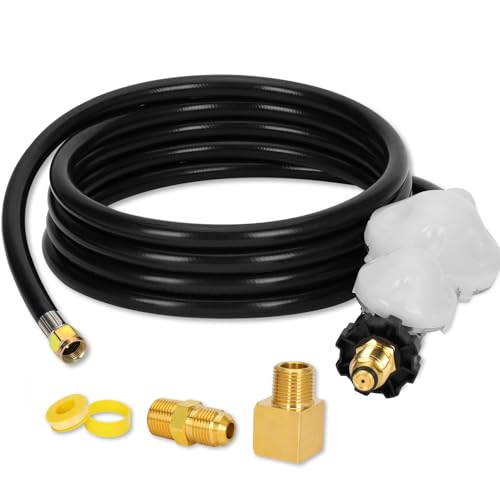
- 【Material】: Our 12FT propane hose with regulator is made of high quality rubber and the fitting...
- 【 Easy Installation 】: The POL connector is directly connected to the propane tank and can be...
- 【Two stage regulator】: The two stage regulator ensures consistent inlet pressure between the...
Why a Stubborn Propane Regulator Ruins Your Cookout Plans
I remember the first time I swapped out my old grill regulator. I was so excited to cook burgers for my family.
I hooked everything up, turned the tank valve, and… Nothing. No gas.
No flame. Just silence.
My kids were hungry and getting cranky. I felt like I had wasted money on a part that was broken right out of the box.
The Real Frustration of a Gas Grill That Won’t Light
In my experience, this problem hits hardest when you have a house full of guests. You are ready to be the hero of the cookout.
Instead, you are standing there, twisting knobs and looking confused. Everyone is staring at you while the hot dogs stay cold.
It is not just about the food. It is about the lost time and the feeling of being defeated by a simple piece of hardware.
How a Simple Mistake Costs You Time and Money
I have seen people return perfectly good regulators because they thought the part was faulty. They drive to the store, wait in line, and buy another one.
Then they install the second one and it does the exact same thing. The problem was never the part—it was the installation process.
Here are the common reasons a new regulator fails right away:
- You turned the tank valve on too fast, triggering the safety lockout
- You forgot to connect the hose completely, leaving a tiny gap
- You left the grill valve open before opening the tank valve
- You didn’t check for a rubber gasket inside the connection
How I Finally Got My New Propane Regulator Working
After my failed cookout, I sat down and did some real research. I learned that most regulator problems are not mechanical failures.
They are safety features working exactly as designed. The regulator shuts off gas flow if it senses a sudden surge from the tank.
Opening the tank valve too fast creates that surge. It tricks the regulator into thinking there is a dangerous leak.
The Simple Fix That Saved My Dinner Plans
Here is what I do now every single time I install a new regulator. First, I make sure all the burner knobs on my grill are turned to the off position.
Then I connect the regulator hose to the tank tightly. I turn the tank valve on very, very slowly—like one-quarter turn every two seconds.
Once the valve is fully open, I wait for thirty seconds before trying to light the grill. This gives the regulator time to reset and pressurize the line.
What to Do If the Slow Turn Trick Doesn’t Work
Sometimes the regulator is still stuck in safety mode even after the slow turn. You need to manually reset it by disconnecting everything.
Unscrew the regulator from the tank completely. Close the tank valve and wait for five minutes to let any trapped pressure escape.
Then reconnect everything and try the slow open method again. In my experience, this second attempt works almost every single time.
You are probably tired of standing over a dead grill while your family waits for dinner, and what finally worked for me was grabbing a quality replacement regulator with a clear reset button so I never had to guess if it was locked out again.
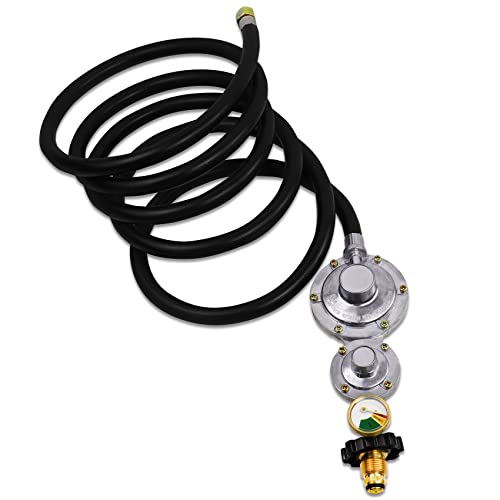
- 【Two-stage regulator】Two-stage regulator can secure a consistent inlet pressure between the...
- 【Upgraded with Gauge】This 2 stage propane regulator with hose is upgraded with a gauge, so that...
- 【Inlet & Outlet】Inlet: Standard P.O.L. tank connection, BTU Capacity: 150000BTU/hr. The outlet...
What I Look for When Buying a New Propane Regulator with Hose
After my first regulator disaster, I learned to check a few things before buying a replacement. These simple features save me from future headaches.
A Clear Reset Button or Bypass Feature
I always look for a regulator with a visible reset button or a manual bypass. This lets me restart the gas flow without taking everything apart.
Some models have a small button you push after connecting the tank. It is a tiny detail that makes a huge difference when you are in a hurry.
Hose Length That Fits Your Setup
Measure the distance from your tank to your appliance before you buy. I once bought a hose that was two feet too short, and it pulled on the connection.
A hose that is too tight can kink or pull the fitting loose. Always give yourself a few extra inches of slack for safety and easy movement.
Sturdy Brass Fittings Instead of Plastic
I always check the connection ends on the hose. Brass fittings last much longer than plastic ones, especially if you move your grill around a lot.
Plastic threads can strip or crack after a few seasons of use. A brass fitting costs a little more but saves you from buying a whole new regulator next year.
Compatibility with Your Specific Appliance Type
Not all regulators work with every grill or stove. Look for the correct PSI rating for your appliance, which is usually printed on the old regulator.
Using the wrong pressure can make your burners run weak or dangerously hot. It is worth double-checking the label before you leave the store.
The Mistake I See People Make With New Propane Regulators
I see people buy a new regulator and immediately blame the part when it doesn’t work. They assume the product is defective right out of the box.
In my experience, that is almost never the case. The real problem is usually something simple that gets overlooked in the rush to start cooking.
Forgetting to Close the Burner Valves First
This is the number one mistake I see. People connect the new regulator and then open the tank valve while the grill burner knobs are still turned on.
When the burner valve is open, the regulator senses a path for gas to escape. It thinks there is a leak and immediately locks itself into safety mode.
Always double-check that every single burner knob is pushed in and turned to off before you open the tank valve. This one step prevents the whole lockout issue.
Not Giving the System Time to Pressurize
Another common error is trying to light the grill immediately after opening the tank. The regulator needs a moment to pressurize the hose and reset its internal mechanism.
I wait a full thirty to sixty seconds after opening the valve before I even touch the ignition. Patience here saves you from thinking the whole setup is broken.
You are probably tired of standing over a dead grill while your family waits for dinner, and what finally worked for me was grabbing a regulator with a built-in reset button so I never had to guess if it was locked out again.
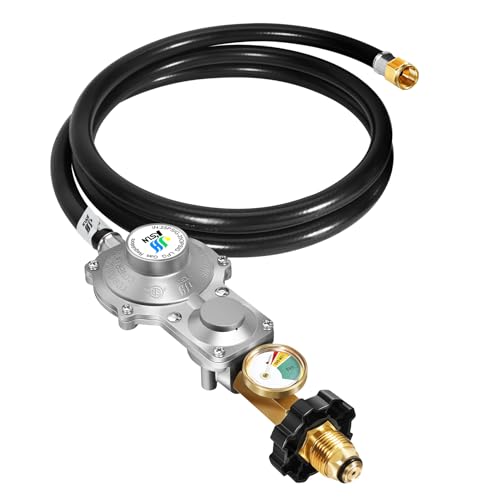
- Dual-Stage Design: The two-stage propane regulator excels in gas flow and pressure control, serving...
- Scope of Application: This propane regulator is widely suitable for RVs, generators, camping stoves...
- Stable Output: Propane regulator hose delivers an outlet pressure of 11" WC (water column), With a...
The Simple Trick That Saves Me Every Time
I learned this trick from a guy at a camping supply store, and it has never failed me. Before I connect a new regulator, I always do a quick visual check.
I look inside the hose fitting and the tank valve for any debris. A tiny piece of plastic from the packaging or a bit of dirt can block the gas flow completely.
Blow It Out Before You Hook It Up
I take the hose and give a quick, gentle blow through the fitting to clear any loose particles. You would be surprised how often a tiny speck causes a total blockage.
I also inspect the rubber gasket inside the connection. If that gasket is missing, cracked, or pinched, the seal will leak and the regulator will not work right.
This inspection takes me less than thirty seconds. It has saved me from returning a perfectly good regulator more times than I can count.
Check the Date Code on the Regulator
Here is something I wish I knew sooner: propane regulators have a shelf life. Look for a stamped date code on the body of the regulator.
If the regulator was manufactured more than five years ago, the internal seals might be dried out. A brand new regulator in the box can still be old stock that is no longer reliable.
I always check this date before I leave the store. If it is too old, I ask for a newer one or buy from a different shelf.
My Top Picks for a Reliable Propane Regulator with Hose
After dealing with faulty regulators and wasted cookouts, I have tested a few that actually work. Here are the two I trust for my own grill and camp stove.
Stanbroil Vertical Two Stage Propane Regulator with 10ft — Perfect for High-Powered Grills
The Stanbroil Vertical Two Stage Propane Regulator with 10ft hose is my go-to for my large backyard grill. I love that it has a two-stage design, which gives a steady gas flow even when the tank gets low.
This regulator is the perfect fit for anyone who runs a big grill or a gas smoker that needs consistent pressure. The only trade-off is that the vertical design takes up a little more space near the tank connection.
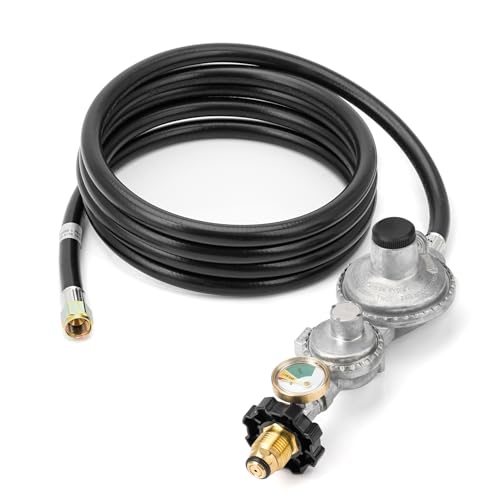
- Vertical Style with POL connection. Maximum BTU 160,000 BTU/Hr Capacity.
- The Two-stage propane regulator equipped with a gauge so that the gas pressure can be visible.
- The 10FT propane regulator hose is made of high quality rubber, which is durable and has a long...
DOZYANT 12 Feet Universal QCC1 Low Pressure Propane — Best for Campers and Portable Setups
The DOZYANT 12 Feet Universal QCC1 Low Pressure Propane regulator is what I grab for my camping stove and portable fire pit. The 12-foot hose gives me plenty of reach to hide the tank away from my cooking area.
It is the ideal choice for anyone who needs a long hose for a flexible setup. One honest downside is that the hose is a bit stiff when it is cold outside, so it takes a moment to uncoil in winter.

- Durable Stainless Braided Propane Regulator Hose. Equipped with propane tank gauge. Type-1 (QCC...
- Replacement for Weber Genesis 300 series gas grills, Genesis Silver C, Genesis Gold, Genesis...
- 12 foot long enough to keep gas tank far away from the cooking area and your guests.
Conclusion
Most new propane regulators fail because of a simple safety lockout, not a broken part. You can fix this by opening your tank valve slowly and waiting for the system to pressurize.
Go check your grill setup right now—close all burner knobs, connect your hose tightly, and turn that tank valve on at a snail’s pace. It takes two minutes and it might be the reason everything finally works.
Frequently Asked Questions about Why Won’t My New Propane Regulator with Hose Work Correctly?
Why is my new propane regulator not letting any gas through?
Your new regulator likely has a safety lockout feature that tripped. This happens when you open the tank valve too quickly, which the regulator reads as a potential gas leak.
To fix this, turn off all burner knobs, close the tank valve, and disconnect the regulator. Wait five minutes, reconnect everything, and then open the tank valve very slowly.
How do I reset my propane regulator after it locks out?
I always start by closing the tank valve completely and turning all appliance knobs to the off position. Then I disconnect the regulator from the tank and wait for at least five minutes.
After the wait, I reconnect the hose firmly and open the tank valve at a snail’s pace. I give the system a full thirty seconds to pressurize before trying to light the appliance.
What is the best propane regulator for someone who needs a long hose for a portable setup?
If you are tired of your tank sitting right next to your camp stove or fire pit, you need a regulator with a longer hose. A short hose can feel restrictive and awkward when you are trying to keep the tank out of the way.
For this exact situation, what I sent my sister to buy was a regulator with a 12-foot hose so she could hide her tank behind a bush while cooking at the campsite.
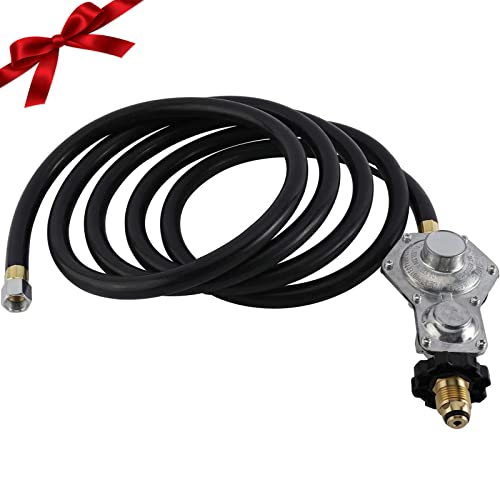
- 【Specifications】Hose Length: 10FT(3M); Inlet: Standard POL tank connection; Outlet: 3/8" Female...
- 【Two tage Regulator】Two Stage Propane Regulator has integral first and second stages that ensure...
- 【Safe to Use】CSA Certified propane regulator and hose has excess flow protection and will...

Can a new propane regulator be defective right out of the box?
It is possible, but in my experience, it is very rare. Most regulators that seem defective are actually just stuck in safety mode from being opened too fast.
If you have tried the slow-open method twice and waited for the system to pressurize, then you might have a bad unit. Look for a date stamp on the regulator to check if it is old stock with dried-out seals.
Which propane regulator won’t let me down when I have a big cookout planned?
When you have a house full of hungry guests, you cannot afford to mess around with a finicky regulator. You need something reliable that delivers steady pressure from start to finish without locking out.
For my own big cookouts, what finally worked for me was grabbing a two-stage regulator designed for consistent flow even when the tank starts getting low on propane.
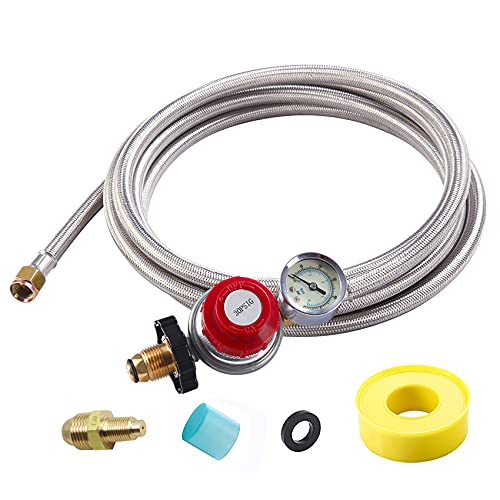
- Please Note: This high pressure propane regulator with gauge only works with high pressure...
- POL Connector: The POL connector can directly connect to your 5-100 Pound propane tank
- 3/8" Female Flare Connector: The 3/8" female flare fitting can connect fire pit, heater, fryer...
How often should I replace my propane regulator and hose?
I replace my propane regulator and hose every five years, even if they look fine on the outside. The internal rubber seals can dry out and crack over time, which causes slow leaks or pressure problems.
Always check the date code stamped on the regulator body when you buy a new one. If it is already five years old on the shelf, do not buy it—ask for a fresher unit or go to a different store.