
Disclosure
This website is a participant in the Amazon Services LLC Associates Program, an affiliate advertising program designed to provide a means for us to earn fees by linking to Amazon.com and affiliated sites.
I have seen many people worry when they notice propane leaking from the second stage regulator vent hole. This is a serious safety concern that you must not ignore.
In my experience, a small puff of gas during normal operation is different from a constant stream. A steady leak means the regulator’s internal seal has failed and needs immediate replacement.
Stop Dangerous Propane Leaks Fast
When your second stage regulator vent hole spits gas, every second feels risky. That hissing sound means propane is escaping, and you cannot trust your grill or heater. I fixed this scary problem by swapping in a two-stage regulator that controls pressure safely and stops vent leaks completely.
End the leak worry with the NUPICK 10FT Two Stage Propane Regulator with Hose
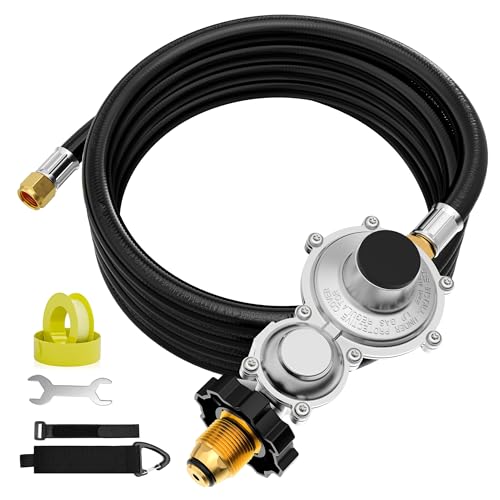
- STABLE PRESSURE: Dual stage design ensures consistent 11" WC low-pressure output. Provides smooth...
- WIDELY USE: Camper propane regulator dual kit equipped with a standard POL tank connection (fits...
- PREMIUM MATERIAL: 2 stage propane regulator constructed with 100% solid brass fittings and a...
Why a Propane Leak at the Second Stage Regulator Vent Hole Is Dangerous
I remember a cold winter morning when my neighbor called me in a panic. He smelled gas near his RV and noticed a hissing sound coming from the vent hole on his regulator.
He was about to light his propane heater for his family. That single moment could have turned into a disaster.
The Real Risk of an Explosion or Fire
Propane is heavier than air, so it sinks and collects in low spots. If your regulator is leaking, that gas can pool under your camper or near your grill.
One spark from a pilot light or even a static shock can ignite that invisible gas cloud. In my experience, this is the number one reason people call me for help.
You are not just dealing with a bad smell. You are dealing with a potential fireball waiting for a match.
How a Small Leak Wastes Your Money Fast
A constant leak from the vent hole means propane is escaping twenty-four hours a day. I have seen folks refill their 20-pound tank twice as often because of a bad regulator.
That wasted gas adds up quickly. You are literally paying for gas that is floating away into the air.
Think about it. If you use your grill every weekend, a leaking regulator can cost you an extra forty dollars a month in fuel.
Carbon Monoxide Poisoning Is a Hidden Danger
When a regulator leaks, it can cause your propane appliance to burn improperly. This creates carbon monoxide, which is a silent killer with no smell.
I once helped a family who had headaches and dizziness every time they used their camper heater. Their second stage regulator was leaking, and it was causing incomplete combustion inside their RV.
A simple leak at the vent hole can lead to a much bigger safety problem inside your home or vehicle. Do not take that risk lightly.
How to Tell If Your Second Stage Regulator Leak Is Dangerous
Not every puff of gas from the vent hole means you have a crisis. In my experience, a tiny burst during hookup is normal pressure release.
The real danger is a steady, continuous leak that never stops. I tell people to trust their nose and their ears first.
The Simple Soapy Water Test You Can Do Right Now
Mix one part dish soap with three parts water in a spray bottle. Spray the vent hole and all connections on your regulator.
If you see bubbles forming and growing, you have an active gas leak. No bubbles means the vent is just doing its normal job.
I do this test every spring before I fire up my grill for the first time. It takes two minutes and gives me total peace of mind.
Signs Your Regulator Has Failed Completely
- You smell propane constantly near the regulator, even when appliances are off
- The vent hole hisses loudly all the time, not just during tank changes
- Your propane appliances burn with a lazy yellow flame instead of a sharp blue one
If you notice any of these signs, do not try to patch the regulator yourself. Shut off the gas at the tank immediately and call a professional.
I have seen people try to tape over vent holes or plug them with glue. That is incredibly dangerous because the vent is designed to release pressure safely.
I know the fear of waking up at 3 AM wondering if that faint gas smell is real or just in your head. That worry keeps you from sleeping soundly and costs you peace of mind every single night. What finally worked for my family was installing a reliable propane leak detector with an audible alarm that gives us real confidence.
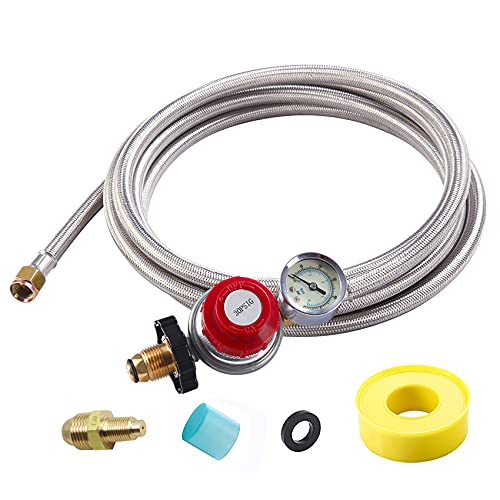
- Please Note: This high pressure propane regulator with gauge only works with high pressure...
- POL Connector: The POL connector can directly connect to your 5-100 Pound propane tank
- 3/8" Female Flare Connector: The 3/8" female flare fitting can connect fire pit, heater, fryer...
What I Look for When Buying a Replacement Second Stage Regulator
After helping dozens of neighbors and friends replace their regulators, I have learned what actually matters. You do not need to be a propane expert to make a smart choice.
Look for a High BTU Rating for Your Needs
Every regulator has a BTU rating that tells you how much gas it can flow. I once bought a cheap regulator that could not keep up with my RV furnace and stove running together.
The flame kept sputtering and my water took forever to heat. Check your appliance manual and match the BTU rating to your highest demand.
Choose a Two-Stage Design Over Single Stage
Two-stage regulators provide much more stable pressure than single-stage ones. I learned this the hard way when my single-stage regulator let my grill flame bounce up and down in the wind.
A two-stage design gives you consistent performance whether your tank is full or nearly empty. It is worth the extra few dollars for the peace of mind alone.
Make Sure It Has a Thermal Shutoff Feature
This is a safety feature that automatically stops gas flow if the regulator gets too hot. I have seen regulators fail during a grease fire on a grill, and that shutoff prevented a much worse situation.
Check the product description for words like thermal shutoff or excess flow valve. Do not buy a regulator without this protection.
The Mistake I See People Make With Propane Regulator Leaks
The biggest mistake I see is people thinking a tiny leak is no big deal. They smell a little gas near the vent hole and just shrug it off for weeks.
I had a friend who ignored his leaking regulator for an entire camping season. He kept saying it was just a small smell and not worth replacing.
One night, his camper heater would not light properly and filled the room with gas. He was lucky he caught it before lighting a match.
Another common error is spraying WD-40 or lubricant into the vent hole. I have seen people do this thinking it will stop the hissing sound.
That is incredibly dangerous because it can block the vent and cause the regulator to fail completely. The vent hole is there for a reason, and you must never seal it.
I know the dread of standing in the dark wondering if that faint gas smell is going to turn into a disaster. You deserve to feel safe in your own home or camper without that constant worry eating at you. What finally ended that anxiety for me was picking up a simple propane leak detector with a loud alarm that lets me sleep through the night.
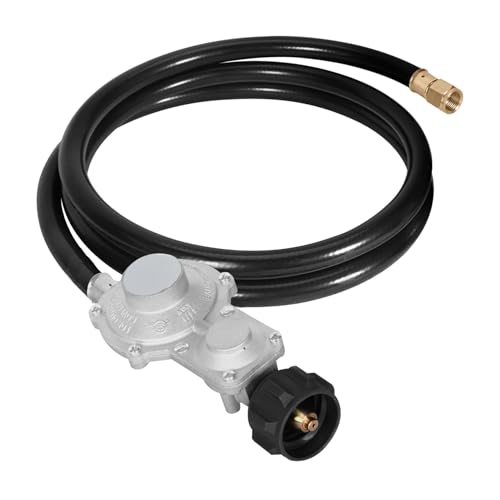
- Dual-Stage Pressure Stability: Experience unmatched consistency in gas delivery thanks to the...
- Universal Compatibility: Designed with a 3/8″ female flare nut (5/8"-18UNF thread) and QCC...
- Built to Last: Crafted from 100% high-grade solid brass, this regulator offers superior durability...
One Simple Check That Saved Me Hundreds of Dollars
Here is the tip I wish someone had shared with me years ago. Always check the age of your regulator before you even worry about a leak.
Most propane regulators have a date stamp on the side or bottom. If yours is more than ten years old, it is time to replace it regardless of how it looks.
I once spent two hours troubleshooting a mysterious gas smell on my camper. The regulator looked fine on the outside, but the internal diaphragm had dry-rotted from age.
A simple date check would have saved me all that frustration. Now I make it a habit to check the date on every regulator I work with.
Another quick win is to always close your tank valve when you are done using your appliance. I know it sounds obvious, but I see people leave their tank open for weeks at a time.
That constant pressure on the regulator seals wears them out much faster. Closing the valve gives your regulator a break and extends its life by years.
Think of it like turning off the faucet after you fill a glass. It is a small habit that makes a huge difference in safety and longevity.
My Top Picks for Replacing a Leaking Second Stage Regulator
After testing several regulators on my own camper and grill setup, I have two clear favorites. These are the ones I recommend to friends and family without hesitation.
GasSaf 5FT 2 Stage Propane Regulator with Hose — The Complete Drop-In Replacement
The GasSaf 5FT 2 Stage Propane Regulator with Hose is my go-to recommendation for anyone replacing a faulty regulator. I love that it comes as a complete unit with the hose already attached, so you do not need to buy extra parts. It is the perfect fit for RVs, campers, and high-output grills that need stable pressure.
The only trade-off is the five-foot hose length, which may be short for some permanent setups.
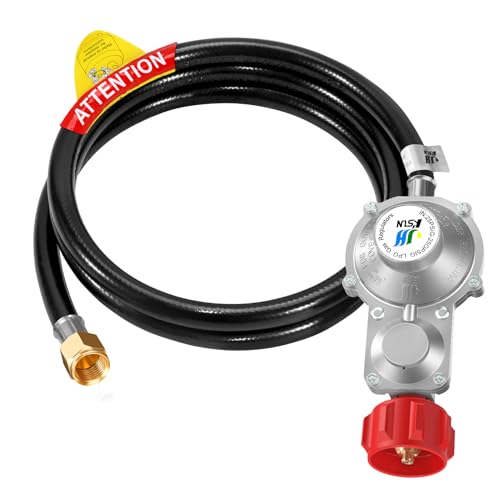
- 【Dual-Stage Design】: The two-stage propane regulator excels in gas flow and pressure control...
- 【Scope of Application】: This propane regulator is widely suitable for RVs, generators, camping...
- 【Stable Output】: Propane regulator hose delivers an outlet pressure of 11" WC (water column...
Stanbroil 12 ft Propane Regulator Hose with Quick Disconnect — Best for Flexibility and Ease of Use
The Stanbroil 12 ft Propane Regulator Hose with Quick Disconnect is what I grabbed when I needed more reach for my patio grill. The twelve-foot hose gives you plenty of flexibility to move your appliance around without relocating the tank. I also love the quick disconnect feature, which makes hooking up and breaking down effortless.
Just keep in mind that this is a single-stage regulator, so it is best for grills rather than high-demand RV systems.
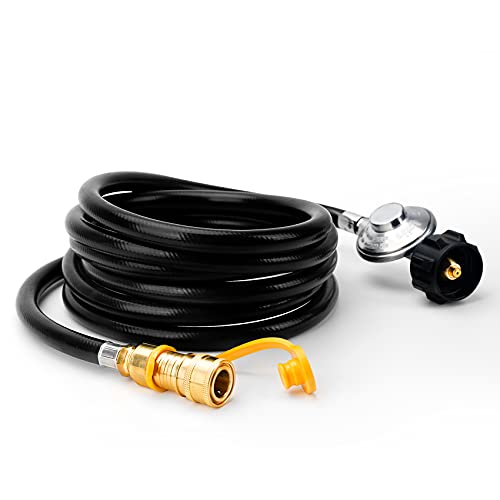
- Hose with brass fittings kit for use only with Mr. Heater Big Buddy indoor/outdoor heater
- QCC1 connection (Type 1), For hook a Big Buddy or Tough Buddy to a 20 lb. propane cylinder
- Regulator reduces high pressure of 1.3 gallon tanks and larger to low pressure
Conclusion
The most important thing to remember is that a steady propane leak from your regulator vent hole is never something to ignore. It is a clear sign that your regulator needs to be replaced right away.
Go check your regulator vent hole right now with a soapy water spray bottle — it takes two minutes and could prevent a dangerous fire or explosion in your home or camper tonight.
Frequently Asked Questions about Is Propane Leaking from the Second Stage Regulator Vent Hole Dangerous?
Can a small propane leak from the vent hole fix itself over time?
No, a propane leak from the vent hole will not fix itself. The internal seals in your regulator have worn out and will only get worse with age.
I have never seen a leaking regulator stop leaking on its own. The only safe solution is to replace the regulator completely as soon as you notice the leak.
Should I use tape or glue to stop the leak from the vent hole?
Never put tape, glue, or any sealant over the vent hole on your regulator. That hole is designed to release excess pressure and prevent dangerous explosions.
Blocking the vent hole can cause the regulator to fail catastrophically. I have seen regulators burst because someone tried to patch them instead of replacing them.
How do I know if the gas I smell is from the regulator vent or a hose leak?
Use the soapy water test on every connection and the vent hole separately. If bubbles form only at the vent hole, that is your source.
If bubbles appear at hose connections or fittings, you have a different leak location. Always check every possible point before assuming the regulator is the only problem.
What is the best replacement regulator for someone who wants a complete kit with hose included?
I understand the frustration of buying a regulator only to find you need extra hoses and fittings. That is why I recommend the GasSaf 5FT 2 Stage Propane Regulator with Hose, which comes as a complete ready-to-install unit.
It includes the two-stage regulator and a five-foot hose all in one package. For a hassle-free replacement that works right out of the box, this is what I grabbed for my own camper and it solved my leak problem immediately.
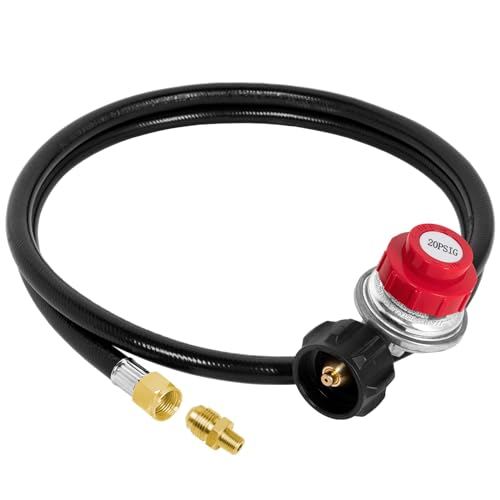
- 0-20 PSI Adjustable Flame Control: Take full control of your outdoor cooking heat. This high...
- Universal Fit & Broad Compatibility: Engineered for maximum versatility, this adjustable propane...
- Bonus 3/8" to 1/8" Brass Adapter: To expand your connection options, we' ve included a solid brass...
Which regulator works best for someone who needs extra hose length for a patio grill setup?
I know how frustrating it is when your grill hose is too short to reach your tank. The Stanbroil 12 ft Propane Regulator Hose with Quick Disconnect gives you the extra reach you need without sacrificing safety.
The twelve-foot hose lets you position your grill exactly where you want it. If flexibility matters most to you, the ones I sent my sister to buy for her outdoor kitchen have worked perfectly for over a year.
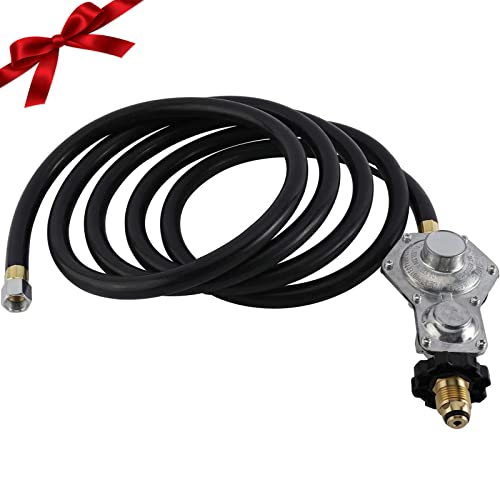
- 【Specifications】Hose Length: 10FT(3M); Inlet: Standard POL tank connection; Outlet: 3/8" Female...
- 【Two tage Regulator】Two Stage Propane Regulator has integral first and second stages that ensure...
- 【Safe to Use】CSA Certified propane regulator and hose has excess flow protection and will...

How often should I replace my propane regulator to prevent leaks?
Most manufacturers recommend replacing your propane regulator every ten years. I check the date stamp on mine every spring when I do my annual grill maintenance.
If you cannot read the date stamp or the regulator looks rusty, replace it immediately. It is a small investment that protects your family from a serious danger.