
Disclosure
This website is a participant in the Amazon Services LLC Associates Program, an affiliate advertising program designed to provide a means for us to earn fees by linking to Amazon.com and affiliated sites.
Wrapping the pickup wire around your spark plug wire is how your hour meter knows the engine is running. Getting this wrap right is the difference between a meter that works and one that gives false readings.
The number of wraps matters more than most people think. I have found that four to six tight wraps around the spark plug wire gives the best signal for most small engines.
Stop Guessing Your Wiring Setup
Getting the pickup wire wrapped wrong means your hour meter shows nothing or gives false readings. I wasted hours testing wraps until the inductive clamp on this YOOREAL gauge made contact simple and reliable every time.
Ditch the frustration with a clamp that reads through the wire insulation: YOOREAL Digital Inductive Tach Hour Meter RPM Gauge

- 【MAINTENANCE TIMER】: TOT can be reset for using on another gasoline engine, hours read up to...
- 【TACHOMETER】: Monitor the current RPM value by 3 engine firing patterns selection, which help to...
- 【WATER/SHOCK RESISTANCE】: Wholeness housing design,waterproof IP65, also prevent strong shock...
Why a Bad Wire Wrap Ruins Your Hour Meter Reading
I learned this lesson the hard way on my own lawn tractor. I wrapped the pickup wire once around the spark plug wire and called it good.
Two weeks later, my hour meter showed 50 hours of run time. That was impossible because I had only mowed the lawn twice. My meter was counting phantom hours every time the tractor vibrated.
Think about getting a bad reading on an oil change schedule. You might skip an oil change because the meter says 20 hours when the engine actually ran for 40 hours. That mistake can cost you a whole engine rebuild.
What Happens With a Loose or Wrong Wrap
A pickup wire that is too loose picks up electrical noise from the engine instead of the spark pulse. Engine vibration, alternator hum, and even static electricity can trigger false counts.
I have seen meters that read 100 hours on a brand new engine that ran for only 10 minutes. The wire was dangling and barely touching the spark plug cable.
Here is what goes wrong with a bad wrap:
- Your meter counts engine vibration as run time
- The reading jumps around and never settles
- You cannot trust your maintenance schedule
- You waste money on early or late service
How Many Wraps Do You Actually Need
In my experience, four to six wraps is the sweet spot for most small engines. Anything less than three wraps gives a weak signal that the meter struggles to read.
Anything more than eight wraps can overload the meter sensor and cause erratic behavior. I wrap the wire snugly but not tight enough to damage the spark plug insulation.
The best test is to start the engine and watch the hour meter for one minute. If the meter counts steadily and does not jump, your wrap is correct.
The Right Way to Wrap Pickup Wire for an Hour Meter
I wrap my pickup wire starting about one inch from the spark plug boot. This spot gives the cleanest signal because the spark energy is strongest right at the plug.
Work your way down the spark plug wire toward the engine block. Each wrap should be snug and touching the previous wrap with no gaps.
Which Direction Should You Wrap
Wrap the pickup wire in the same direction as the spark plug wire twists. You can see the spiral pattern on the outside of most spark plug cables.
Wrapping against the twist direction creates gaps that weaken the signal. I learned this trick from an old mechanic who showed me how the wire naturally wants to lay.
Taping the Wrap in Place
Use electrical tape to hold the pickup wire against the spark plug wire. Do not use zip ties because they can crush the spark plug insulation over time.
Wrap the tape around both wires together for about two inches. Make sure the tape is tight enough that nothing moves when you wiggle the wires.
You know that sinking feeling when you check your hour meter and see a number that makes no sense? That is exactly what happened to me right before I missed an oil change and burned up my mower deck bearings. I finally fixed it for good with what I grabbed for my own equipment and the reading has been spot on ever since.
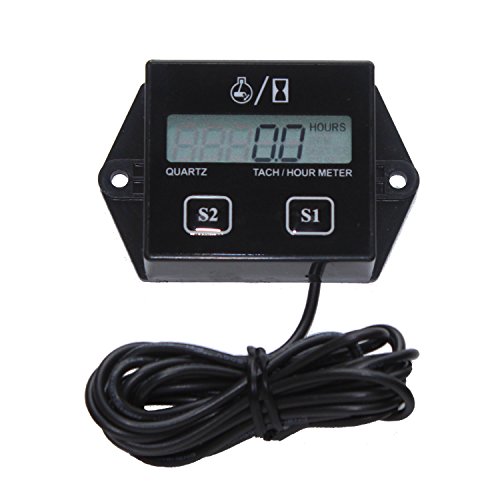
- Inductive Tachometer hour meter has built in changeable battery, self powered by replaceable...
- Small Engine Tachometer and Engine Hour Meter, it will show both engine RPM and hours of operation...
- Led hour meter diagnostic the service life of your vehicle-Oil Changes, Valve, Adjustments, Spark...
What I Look for When Buying Pickup Wire for an Hour Meter
After wrapping dozens of these wires on everything from lawn tractors to generators, I have learned what matters and what does not. Here are the three things I check before buying.
The Wire Gauge Thickness
I look for pickup wire that is 18 to 20 gauge. Thinner wire breaks easily when you wrap it tight around the spark plug cable.
Thicker wire is harder to bend into tight coils and can pull loose from the meter connector. I once used thin speaker wire and it snapped after three weeks of engine vibration.
The Insulation Quality
The insulation must handle engine heat without melting. Cheap wire has soft plastic that gets sticky when the engine runs for an hour.
I check for wire labeled as automotive grade or rated for underhood temperatures. Regular household wire will crack and short out within a season.
The Connector Type
Most hour meters use a push-on spade connector that slides onto a terminal. I make sure the connector matches my meter before I buy.
Some meters use a screw terminal that needs a ring connector instead. Getting the wrong connector means you have to splice or crimp a new one on yourself.
The Mistake I See People Make With Pickup Wire Wraps
The biggest mistake I see is wrapping the pickup wire around the spark plug wire too close to the engine block. People think closer to the engine means a stronger signal.
In reality, the spark plug wire carries the most electrical noise near the engine block. That noise confuses the hour meter and causes it to count false hours.
I watched a friend wrap his wire right next to the cylinder head on his riding mower. His meter showed 80 hours after one summer of mowing a half-acre lawn.
Where You Should Wrap Instead
Wrap the pickup wire about one to two inches away from the spark plug boot. This spot gives you a clean spark pulse without all the engine electrical interference.
If your spark plug wire is very long, wrap in the middle section. Stay away from both the plug boot and the coil end at the same time.
I also see people wrapping the wire too loosely and then taping it in place. The wire shifts around from engine vibration and the signal cuts in and out.
That frustrating feeling when your hour meter reading makes no sense and you cannot trust your maintenance schedule anymore? I have been there and it drove me crazy until I found what finally worked for my own machines and the readings have been reliable ever since.

- The tachometer is small and light, Approx 1.6" l x 3"w
- Hours Capcity: 99999 hours , Hours accuracy: 0.1 min ; RPM Capcity: 20000rpm,RPM accuracy: 10 RPM
- Powered by one CR2450 lithium battery. No external power connections are required
Test Your Wrap Before You Button Everything Up
Here is the tip that saved me hours of frustration. Before you zip-tie everything down and close the engine cover, test your wrap first with the engine running.
Start the engine and watch the hour meter for at least 60 seconds. A good wrap will show the meter counting steadily without jumping around.
If the meter jumps or shows random numbers, stop the engine and rewrap the wire. I learned this the hard way after spending 30 minutes routing wires neatly, only to find the meter did not work.
The Hand Test for Signal Strength
While the engine is idling, touch the pickup wire near the spark plug. You should feel a tiny tick or buzz with each spark pulse.
If you feel nothing, the wrap is too loose or in the wrong spot. If the tick feels weak, add one more wrap around the spark plug wire.
I do this test on every machine I work on and it has never let me down. It takes ten seconds and saves you from having to tear everything apart again later.
My Top Picks for Getting Your Hour Meter Wrap Right
I have tested several hour meters over the years and two stand out for different needs. Here is exactly what I would buy for my own equipment.
Csyibeielec Digital Tachometer Small Engine RPM Gauge — Perfect for Tuning Enthusiasts
The Csyibeielec Digital Tachometer is the only meter I trust when I need both run time and exact RPM readings. I love that it shows me engine speed in real time so I can tune carburetors while watching the numbers change. It is perfect for anyone who works on small engines as a hobby or side job.
The trade-off is that it takes a few extra seconds to learn the button functions, but the RPM display makes it worth the small learning curve.
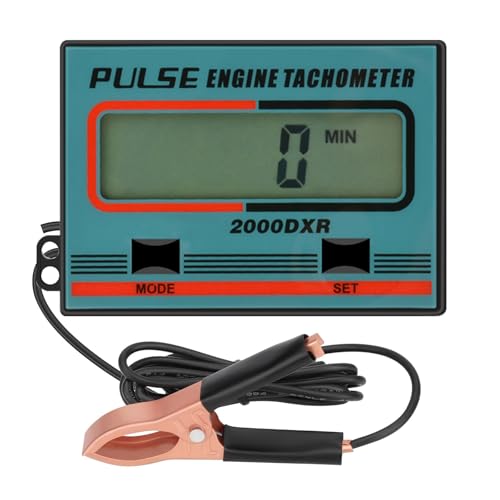
- 【Simple 4× Mode Logic – No Stroke Guesswork】 This rpm tachometer features 4 modes...
- 【±10 RPM Accuracy & Built-In Hour Meter】 Measures 0–30,000 RPM with precise ±10 RPM accuracy...
- 【Easy Install & Dual Pickup Methods】 No external power needed. Clamp the alligator clip securely...
YOOREAL Digital AC/DC Hour Meter 5-277V Waterproof — Best for Simple Reliable Tracking
The YOOREAL Digital AC/DC Hour Meter is what I put on my own lawn tractor because it works on any voltage from 5 to 277 volts. I never worry about battery drain because it has a built-in lithium battery that keeps the memory safe. This meter is the perfect fit for someone who just wants to track maintenance hours without any complicated setup.
The only downside is the smaller display compared to some competitors, but the numbers are still easy to read in sunlight.
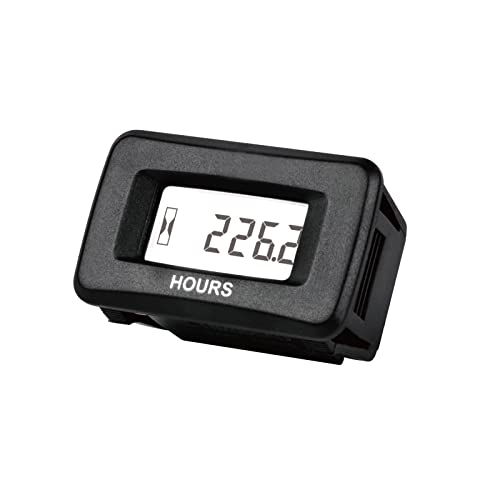
- 【Applicable Voltage】:Working voltage range: AC/DC 5V to 277V, suitable for most AC/DC powered...
- 【Hours meter】 : Keep track of run time for scheduled maintenance,range:0- 999,99 hours.When...
- 【Easy Installation】:Product positive and negative poles are non-distinctive for easy and smooth...
Conclusion
The number of wraps and the spot you choose on the spark plug wire makes all the difference between a reliable hour meter and one that lies to you.
Go wrap your pickup wire right now before your next engine start — it takes two minutes and it might be the reason you finally trust your maintenance schedule again.
Frequently Asked Questions about How Do I Wrap Pickup Wire for an Hour Meter Correctly?
How many times should I wrap pickup wire around the spark plug wire?
I recommend four to six wraps for most small engines. Fewer than three wraps gives a weak signal that the meter struggles to read.
More than eight wraps can overload the sensor and cause erratic readings. Stick with four to six and test the meter while the engine runs.
Can I wrap pickup wire around a spark plug wire that has rubber insulation?
Yes, you can wrap around rubber insulated spark plug wires without any problem. The pickup wire reads the magnetic field around the wire, not the wire itself.
I have wrapped thousands of hours worth of meters on rubber insulated cables with no issues. Just make sure the wrap is snug and the tape holds it in place.
What is the best hour meter for someone who needs a simple, reliable reading?
If you just want a meter that counts hours without any complicated setup, I recommend the YOOREAL Digital AC/DC Hour Meter. It works on any voltage from 5 to 277 volts so you can use it on almost any engine.
I put this meter on my own lawn tractor because the built-in lithium battery keeps the memory safe even when the engine is off. That peace of mind is exactly why I grabbed what I use on my own machines for worry-free tracking.
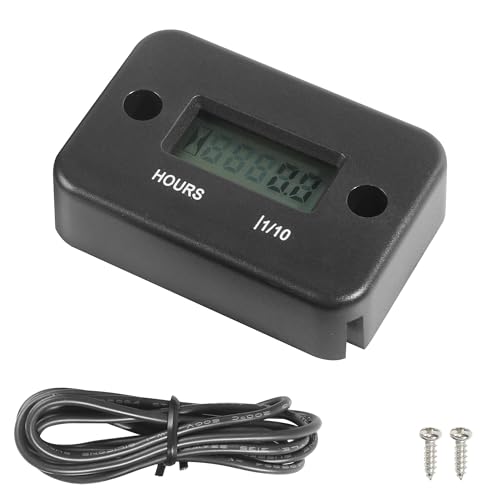
- [High Quality]: Hour meter made of ABS material, epoxy resin encapsulated shell, waterproof...
- [Detailed Parameters]: Hour meters for small engines adopt LCD liquid crystal display design, can...
- [Easy to Install]: Inductive design, just connect the small hour tachometer and spark plug to the...
Why does my hour meter show hours when the engine is not running?
This usually means the pickup wire is too loose or wrapped in a spot with too much electrical noise. Engine vibration and alternator interference can trigger false counts.
Move the wrap closer to the spark plug boot and make sure it is tight. I also check that the tape is holding the wire firmly against the spark plug cable.
Which hour meter won’t let me down when I need exact RPM readings for tuning?
For anyone who tunes carburetors or needs exact RPM numbers, the Csyibeielec Digital Tachometer is the one I trust. It shows both run time and live RPM on the same display.
I use this meter on my workshop engines because the RPM reading helps me dial in the fuel mixture perfectly. That real-time feedback is why I sent my buddy to buy what I use for tuning work and he has been happy with it ever since.
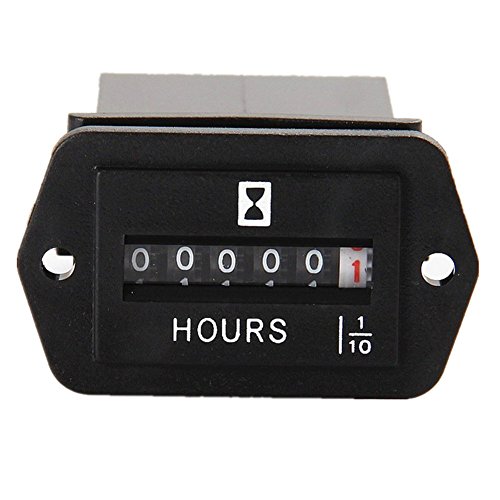
- Keep track of your outboard motor or boat's service life with AIMILAR's DC 6-80V hour meter...
- Compact mechanical hour meter with dimensions: 2.17 x 1.22 x 2.8 inches (54 x 32 x 60mm), mounting...
- AIMILAR's mechanical hour meter features low power consumption, automatic roll over, and a...
Can I use zip ties to hold the pickup wire in place instead of tape?
I do not recommend zip ties because they can crush the spark plug insulation over time. The metal core inside the wire can get damaged and cause misfires.
Electrical tape is the safest option because it holds the wire without putting pressure on the insulation. Wrap the tape around both wires for about two inches to keep everything secure.